
Stabilisers and thrusters: calm at anchor, easy in the marina
Fins and gyros take the roll out of an anchorage; thrusters take the stress out of a crowded harbour. Here is how they work, how to look after them and where their limits lie.
Anyone who has spent a night at anchor in a rolling swell knows the sound: a glass sliding across a shelf, a locker door clicking open and shut, the slow creak of a boat that cannot settle. And anyone who has brought a heavy motor yacht into a tight berth in a crosswind knows the other sound, the quick buzz of a thruster pushing the bow back into line. Stabilisers and thrusters are the two systems that make a modern yacht calm and manageable, and both quietly depend on regular care.
Fin stabilisers: active wings under the hull
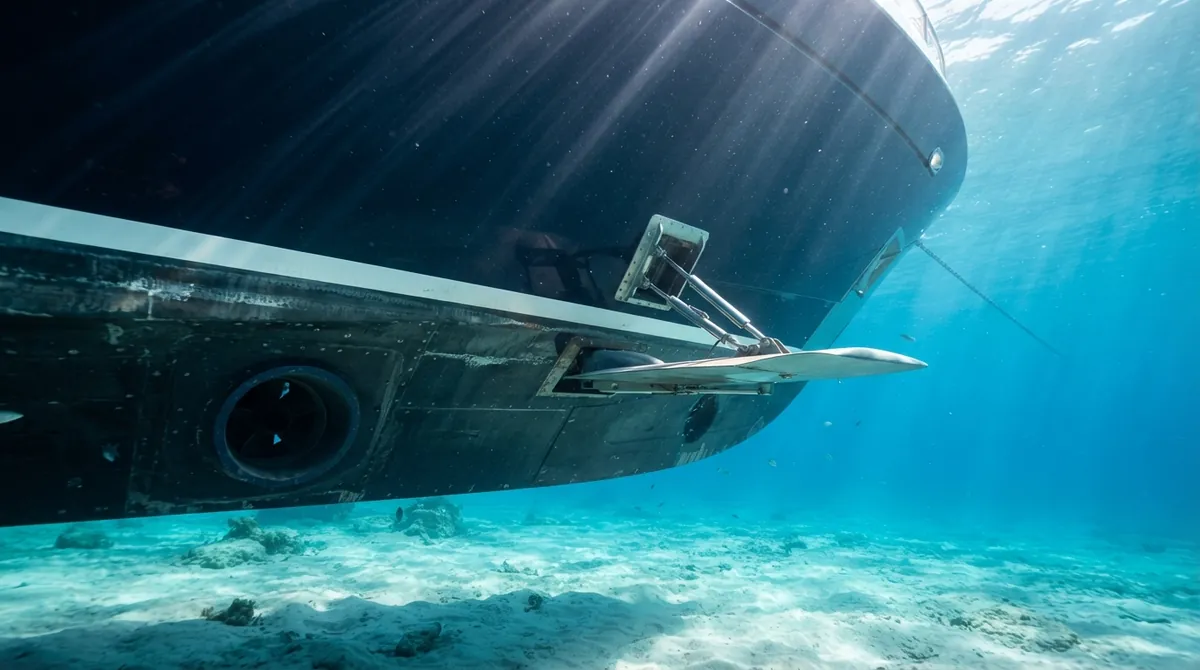
Fin stabilisers are short wings that project from the hull below the waterline, usually one on each side. Motion sensors detect the roll, and a control unit turns the fins, hydraulically or electrically, so that the water flowing over them produces a force against the roll. Underway they are very effective, because the lift of a fin grows with the speed of the water passing it.
At anchor, ordinary fins have little water flowing over them. Zero speed fins solve this by moving in a sweeping, paddling motion that pushes against the water even when the boat lies still. They tend to be larger and their control more demanding, but they bring something of the calm of a passage into the anchorage.
Gyroscopic stabilisers: calm from inside the hull
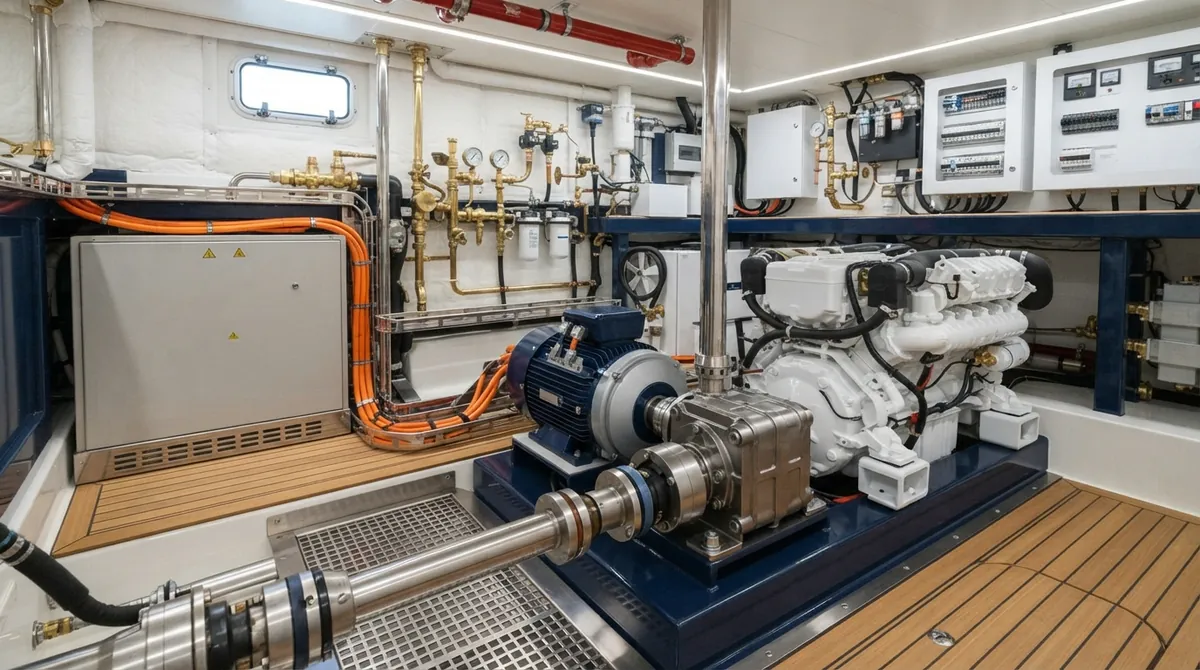
A gyroscopic stabiliser works on a different principle. A heavy flywheel spins at high speed inside a sealed enclosure. When the boat rolls, the gyroscope tilts, or precesses, and in doing so creates a stabilising moment that opposes the roll. The whole unit is installed inside the hull, bolted to a strong foundation, and needs no openings through the bottom.
That is why gyros are popular for retrofit: no fins to fit, no hull penetrations below the waterline and no appendages to catch lines or touch the ground. The challenges lie elsewhere. The unit is heavy, it needs a carefully engineered foundation to carry its forces into the hull, it needs electrical power and cooling, and it takes time to spin up before it gives its full effect, so it is usually started well before arriving at the anchorage.
| Type | Strengths | Points to consider |
|---|---|---|
| Fin stabilisers | Very effective underway; long proven | Hull openings, actuators, seals below the waterline |
| Zero speed fins | Work at anchor as well as underway | Larger fins, more demanding control, power needed at rest |
| Gyroscopic stabiliser | Inside the hull, no hull openings, well suited to retrofit | Weight, strong foundation, power and cooling, spin-up time |
Servicing stabilisers
Both types are serviced at the maker’s intervals, and those intervals deserve respect because the forces involved are considerable. For fins, the critical points are the seals where the fin shafts pass through the hull, the hydraulic system with its fluid, filters and hoses, the actuators and the bearings that carry each fin. A small hydraulic leak or a weeping seal is not a cosmetic issue on a component that sits below the waterline. At haul-out, the fins are inspected for damage, their antifouling renewed and any play in the bearings checked by a specialist.
Gyros need attention to their bearings, cooling and seals at the hours and intervals the maker sets. Many have their own cooling circuit, sometimes using raw water, which brings the usual care of strainers and hoses. Because they are heavy, fast spinning machines, their service belongs with trained technicians.
Thrusters: tunnels, retractables, electric or hydraulic
Bow thrusters, and on larger yachts stern thrusters, push the bow or stern sideways at low speed. The most common design is a propeller in a tunnel running across the hull. Retractable thrusters lower a propeller unit out of the hull when needed and draw it back in afterwards, which avoids the drag and noise of an open tunnel. The drive is either electric, from a dedicated battery or the main bank, or hydraulic, from a pump on the engine or a generator.
Electric thrusters draw very high currents, which means heavy cables, sound connections, the right fuse or breaker and a battery in good health. A thruster that slows or cuts out after a few seconds is often telling you about a tired battery, a corroded terminal or an undersized cable rather than about the motor itself.
Haul-out checks for thrusters
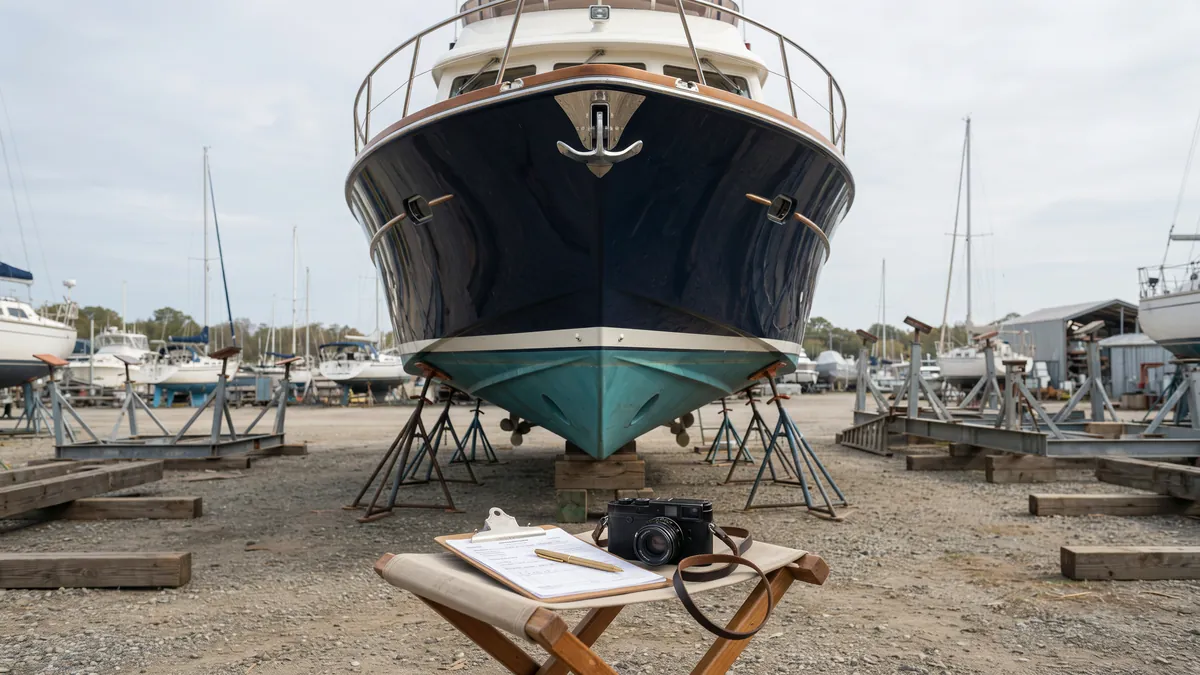
With the boat out, the thruster tunnel is easy to see and easy to neglect. Work through it in order:
- Propeller. Check the blades for damage and fouling, and the propeller for play on its shaft.
- Shear pin. Many units have a shear pin that breaks to protect the drive if something jams the propeller; check it and carry spares.
- Anode. Renew the thruster anode when worn, with the type the maker specifies.
- Tunnel antifouling. Use an antifouling suitable for the unit, as its manual describes, and never paint the anode.
- Gear oil and seals. Where the unit holds oil, check the level and look for water in it.
- Electrical supply. Inspect battery, cables, terminals and isolator for corrosion and heat marks.
- Controls. Test every control panel, including any second steering position or remote.
Short bursts and good seamanship
Most electric thrusters are designed for short periods of use and can run only for a limited time before they need to cool, often protected by a thermal cut-out. Use them in short bursts, a few seconds at a time, rather than holding the button down for one long push. Long runs heat the motor, drain the battery and can trip the protection just when you need it most.
Above all, a thruster is a manoeuvring aid, not a replacement for seamanship. Wind, current, prop walk and the rudder still do most of the work in a good berthing. Practise manoeuvres without the thruster from time to time, so that a flat battery or a broken shear pin is an inconvenience rather than a crisis.
A thruster is a manoeuvring aid, not a replacement for seamanship.
Questions and answers
Do fin stabilisers work at anchor?
Conventional fins have little effect without water flowing over them. Zero speed fins move in a paddling motion and are designed to work at anchor as well. A gyroscopic stabiliser also works with the boat at rest.
Why is a gyro stabiliser popular for retrofit?
It is installed inside the hull and needs no openings below the waterline. It does need a strong foundation, power and cooling, and its weight has to be considered in the boat’s balance.
Why does my bow thruster cut out?
Often because the battery, cables or connections cannot deliver the high current it needs, or because a thermal cut-out has tripped after long use. A broken shear pin can also leave the motor running without thrust. Check the supply first.
Our articles are general information written with care. Intervals and figures are guide values; the maker’s manual, your flag state, classification society and insurer take precedence, and safety critical work belongs with qualified professionals.