Anodes and galvanic corrosion: zinc, aluminium or magnesium?
Sacrificial anodes are small and easily forgotten, yet they protect propellers, shafts and saildrives. How to choose them, fit them and read what their wear is telling you.
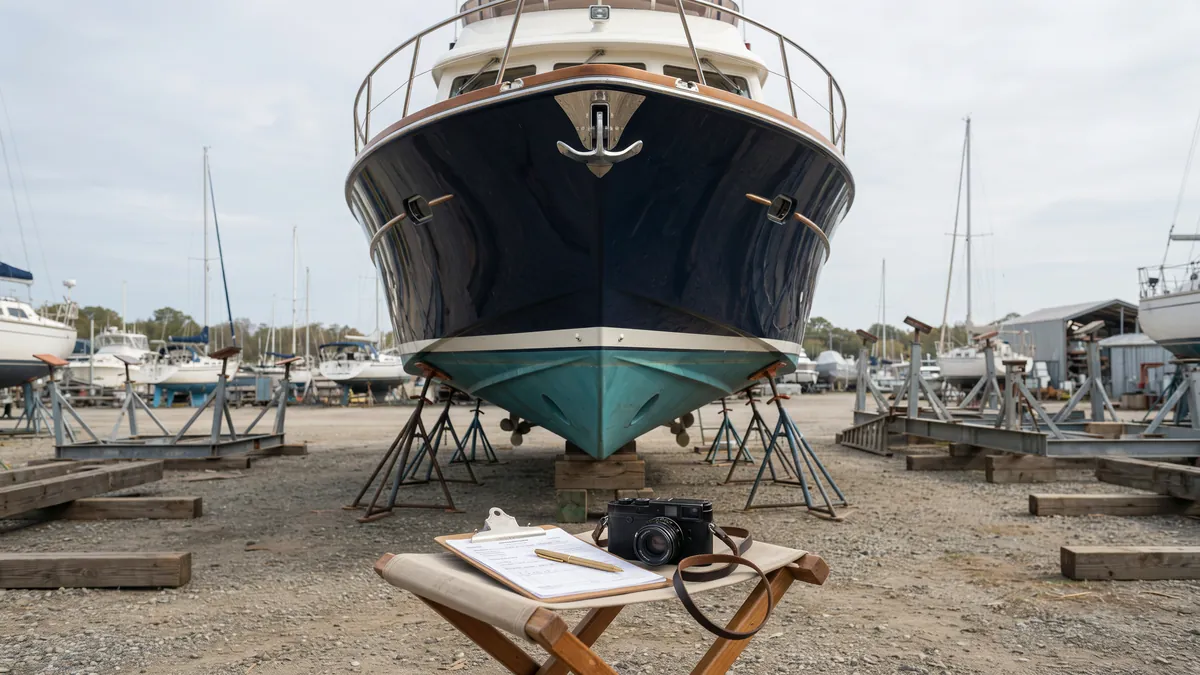
On the day of a haul out, the anodes tell their story before anyone reads a survey. Here, on the shaft, a collar that was smooth and bright in spring has become a rough, grey, crumbling ring, half its old size. On the saildrive leg of the boat next door, the anode looks almost new, still carrying the faint marks of its casting. Both observations matter. One shows protection at work; the other may be a warning that something in the system is not connected the way it should be.
Galvanic corrosion in plain words
When two different metals are connected electrically and sit in an electrolyte such as sea water, they form a simple battery. A small current flows between them, and the less noble metal, the one lower in the so called galvanic series, corrodes while the more noble one is protected. The further apart the two metals are in that series, the stronger the effect.
On a boat this happens all the time. A bronze propeller on a stainless shaft, a saildrive leg with its aluminium casting, bronze seacocks in a hull with other underwater metals: each pairing would, left to itself, sacrifice one metal to protect the other.
How a sacrificial anode helps
A sacrificial anode is a deliberate piece of the least noble metal in the system, connected to the parts it protects. Because it is less noble than the shafts, propellers, saildrives and fittings around it, the anode corrodes instead of them. It is used up gradually, which is exactly its purpose, and replaced before it is gone.
An anode that disappears is doing its job; an anode that never wears is asking a question.
Zinc, aluminium or magnesium
The choice of anode metal depends mainly on the water the boat lives in.
| Anode metal | Best suited to | Notes |
|---|---|---|
| Zinc | Salt water | The traditional choice; in brackish or fresh water it can form a crust and stop working |
| Aluminium alloy | Salt and brackish water | Often preferred today; works across a wider range of waters |
| Magnesium | Fresh water only | Very active; in salt water it wears away fast and can over protect |
Guide only; the maker of the engine, drive or hull fittings may specify a type.
If you move between salt and brackish water, aluminium alloy anodes are usually the practical answer. Boats kept permanently in fresh water need magnesium, and a boat that moves from a lake or river to the sea should have its anodes changed to suit the new water. Mixing different anode metals on one boat is generally best avoided.
Fitting them properly
An anode only works if it is in good electrical contact with the metal it protects. That sounds obvious, yet poor contact is a frequent finding on hauled out boats.
- Never paint anodes. A coat of antifouling seals them off and stops them working.
- Fit them to clean, bare metal, with no paint or corrosion under the contact surface.
- Tighten the fixing screws properly and check that they have not worked loose.
- Where underwater metals are linked by a bonding system, check the wires and their connections.
- Use the shape and size intended for each position, so the anode fits closely and does not disturb the flow.
On many boats a bonding system connects seacocks, the shaft or saildrive and other underwater metals to one or more hull anodes, so that all of them share the same protection. Its connections live in damp bilges, where they corrode and loosen over the years, so they deserve a look whenever the anodes are changed.
Where anodes are found
Most boats carry several anodes, and some are easily forgotten because they are rarely seen.
- On the propeller shaft, as a collar
- At the propeller, often as a nut or cap
- On saildrive legs and sterndrives
- On trim tabs and their fittings
- On the hull, as a plate connected to the bonding system
- On the rudder or its fittings
- Inside heat exchangers and coolers on some engines
The engine anodes are the classic blind spot. Hidden inside the cooling system, they need checking according to the engine maker’s schedule, which may well be more frequent than your haul outs.
Before the boat goes back in, take a moment to note every anode position and the type fitted there, perhaps with a photograph of each. Replacement anodes should match the original shape, size and metal, because an anode that sits proud of a shaft or covers a drain hole on a drive can disturb the flow or trap water. When a diver changes anodes afloat, the same list tells you exactly what to order.
Reading the wear
As a rule of thumb, replace an anode when roughly half of it has gone, and check every anode at each haul out. The pattern of wear is useful information in itself.
Anodes that hardly wear at all may not be protecting anything. The cause is usually poor contact: paint under the anode, a corroded bonding connection or a loose screw. Anodes that vanish much faster than usual point the other way, towards stray current from a wiring fault on board, or from a neighbouring boat or shore installation. Both deserve a check by a qualified marine electrician, who can measure the level of protection with a reference electrode.
Over protection and shore power
More is not always better. Too much anode area, or the wrong metal for the water, can over protect a boat. On wooden hulls, excess protection can make the timber around underwater fittings soften and break down. On aluminium hulls it can lift paint and even attack the metal itself. The aim is the right amount of protection, not the most.
When a boat is connected to shore power, its earth can link its underwater metals with those of other boats in the harbour, creating a much larger galvanic system. A galvanic isolator in the shore power earth line blocks these small galvanic currents while keeping the safety earth intact. Fitting one is work for a qualified electrician, and on boats that spend long periods plugged in it is well worth discussing.
Questions and answers
Which anodes should I use?
It depends on the water. Zinc suits salt water, aluminium alloy anodes suit salt and brackish water, and magnesium is only for fresh water. The maker of your engine or drive may specify a type.
Why are my anodes not wearing?
Usually because of poor electrical contact, for example paint under the anode, a loose screw or a corroded bonding connection. An anode without contact protects nothing.
Why do my anodes disappear so quickly?
Very fast wear can point to stray current from a wiring fault on board or nearby, or to the wrong anode metal for the water. A qualified marine electrician can measure the protection level and trace the cause.
Do I need a galvanic isolator?
If your boat spends long periods connected to shore power, a galvanic isolator is worth discussing with a qualified electrician. It blocks galvanic currents through the shore earth while keeping the safety earth intact.
Our articles are general information written with care. Intervals and figures are guide values; the maker’s manual, your flag state, classification society and insurer take precedence, and safety critical work belongs with qualified professionals.