
Buying a project boat: what is worth saving and what is not
A tired yacht with good bones can become a lifelong companion, while a pretty one with failing structure can swallow years. How to tell the difference before you sign.
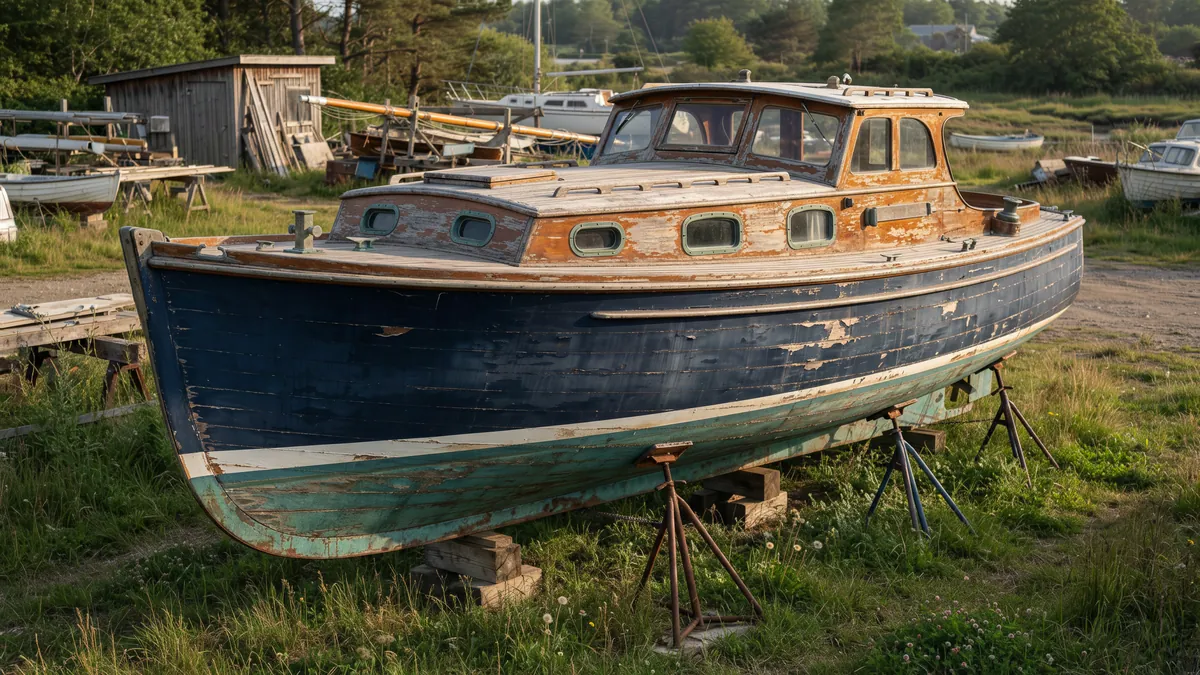
She sits at the back of the yard, half hidden by nettles, with a faded cover sagging over the cockpit. The varnish has gone grey, the windows are cloudy and a green streak of algae marks where rain has run for years. Yet the sheer is lovely, the transom has that particular curve of her era, and when you climb the ladder and step aboard, the deck feels firm underfoot. This is where project boats are bought: in the gap between what you see and what you can imagine.
What a project boat really is
A project boat is an older yacht sold for less than a ready boat of the same type, because work is needed before she can go to sea with confidence. The work may be cosmetic, mechanical or structural, and the whole skill of buying one lies in telling those three apart. Cosmetic work costs time and patience. Mechanical work needs parts and expertise. Structural work can be anything from a sensible repair to a reason to walk away.
The best project boats are those where the hardest part, the structure, is sound and the work lies mostly in things that wear out anyway: paint, varnish, upholstery, wiring, plumbing and sails. The worst are those where the reverse is true, and the shiny parts hide a tired hull.
Worth saving
- A sound hull and deck structure. Firm laminate or timber, no large wet areas, no structural cracks, and a deck that does not flex around its fittings.
- A good keel and keel joint. No signs of a hard grounding, no rust weeping from the bolts, and floors and frames in good order.
- A design you love. You will spend many hours with her. Proportions, layout and sailing character that please you every time you see her are worth more than any amount of extra equipment.
- A rig that can be repaired. A sound mast and boom with tired standing rigging means a normal renewal, not a crisis.
- An engine that can be repaired or replaced. An engine that turns and runs, even badly, is often repairable, and a sound engine bed makes a replacement straightforward.
- Available spare parts. Hatches, windows, rudder bearings and engine parts that can still be found, or made by a good workshop.
Warning signs
Some faults are not impossible to repair, but they turn a project from a pleasure into a rebuild. Treat these as reasons to slow down, to get expert advice and often to walk away:
| Warning sign | What it may mean |
|---|---|
| Wet deck core over large areas | The core must be cut out and replaced across much of the deck, a long and messy job |
| Structural cracks in floors or bulkheads | The hull has been overloaded, often in a grounding, and the structure needs rebuilding |
| Keel damage after groundings | Possible damage to the keel bolts, the hull around the keel and the internal structure |
| Seized or flooded engine | Usually a replacement rather than a repair, often with new wiring and controls |
| Extensive osmosis | The underwater laminate needs stripping, drying and rebuilding over a long period |
| Fire damage | Hidden heat damage to laminate, wiring and fittings well beyond the visible area |
| Missing documents | Uncertain ownership, VAT status or build history that can block registration or a later sale |
A single warning sign is not always the end, but each one belongs in front of a surveyor before you decide.
Counting the work honestly
Every project boat has two budgets: one in money and one in hours. The second is the one that ends most projects. Write down every job you can see, from stripping the brightwork to renewing the wiring, and give each a realistic number of working days. Then add a generous allowance for what you cannot yet see, because older yachts always keep something behind the next panel.
Be honest about three things. Your skills: which jobs you can do well yourself, and which belong to professionals, such as structural repairs, gas installations and anything electrical beyond simple work. Your time: how many weekends a year you really have once family, work and weather have taken their share. And your storage: where the boat will stand, whether you are allowed to work there, whether there is power and cover, and what the yard permits owners to do themselves.
It also helps to put the job list into a sensible order: structure first, then the systems that run through the boat, such as wiring and plumbing, and only then paint, varnish and upholstery. Finishing work done too early is easily damaged, or has to be undone when the structural and system work catches up with it.
Every project boat has two budgets: one in money and one in hours.
Always a survey
However confident you feel, have the yacht surveyed before you buy. A project boat is exactly where an independent eye pays off, because enthusiasm is very good at not seeing things. Tell the surveyor openly that you know the boat needs work and that you want to know whether her structure and keel justify it. The report then becomes a work plan as well as a buying decision, with the urgent safety items, the structural questions and the cosmetic work sorted for you.
The appeal of a classic
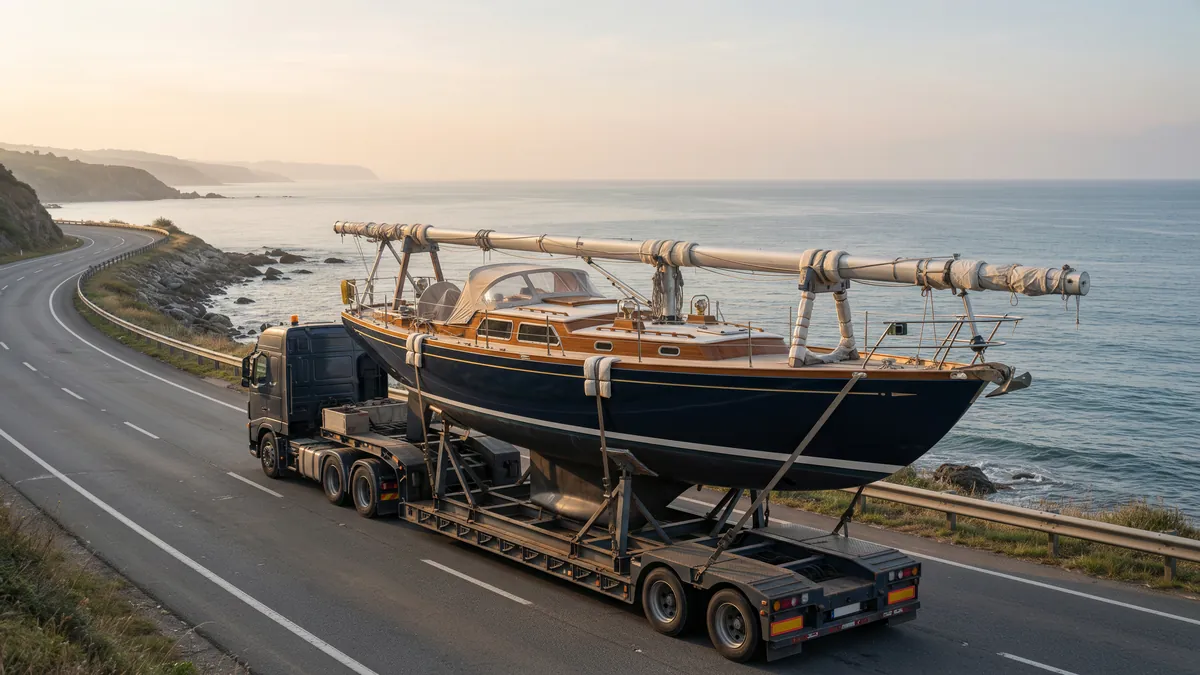
Classic designs can be particularly rewarding projects. A well proportioned yacht from a respected design era, built in solid laminate or good timber, often has a quality of line and a feel at sea that owners cherish for decades. Fittings may need to be made rather than bought, but that work keeps traditional skills alive and gives the finished boat a character that is hard to find in a new one.
The same rule applies to classics as to any project: the structure decides. A beautiful design on a sound hull is a project. A beautiful design on a failing one is a commitment to a full restoration, which deserves to be planned as exactly that, with a yard, a budget of time and a realistic end date. Approached with open eyes, either can lead to the yacht of a lifetime.
Questions and answers
Is a wet deck core always a reason not to buy?
Not always. A small, local wet area around a fitting can be repaired well. Large wet areas across the deck mean replacing core over much of it, which is a major job and often a reason to walk away.
Is it sensible to buy a project boat with a dead engine?
It can be, if the hull and deck are sound and the asking price reflects the work. Plan for a replacement rather than a repair, and include the controls, wiring, exhaust and shaft alignment in the job.
Which work should I leave to professionals?
Structural repairs, keel work, gas installations and anything beyond simple electrical work belong in professional hands. Many owners do the preparation, painting, varnishing and interior work themselves.
Should I buy a project boat without documents?
Be very careful. Missing papers can make it hard to prove ownership, VAT status or build details, and can block registration or a later sale. Resolve the documents before you commit.
Further reading in our network
- ClassicsHeritage and collector cars
Heritage and collector cars, for readers who share the same love of restoring classic designs with patience and care.
Our articles are general information written with care. Intervals and figures are guide values; the maker’s manual, your flag state, classification society and insurer take precedence, and safety critical work belongs with qualified professionals.