
The pre-purchase survey: what a surveyor checks before you buy
Tapping hammers, moisture readings, an oil sample and a sea trial: how an independent survey looks at a yacht from keel to masthead, and how its report helps you decide and negotiate.
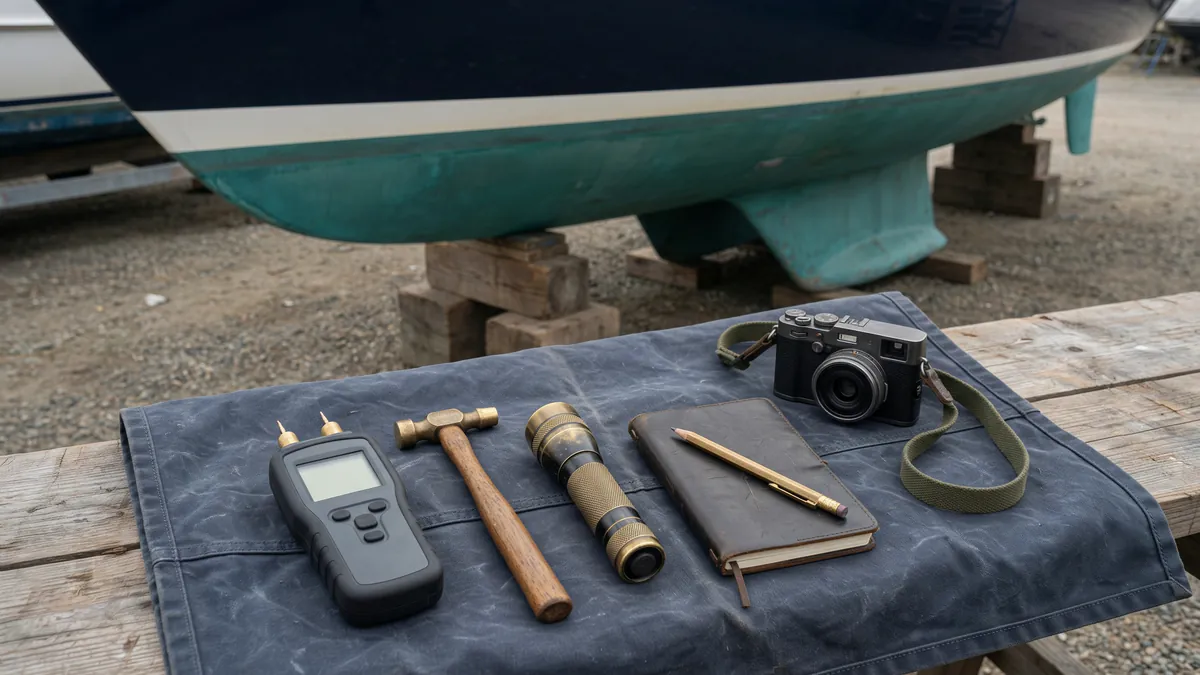
The surveyor works quietly. A small hammer taps its way along the topsides, pauses, then taps again, listening for the dull note that tells of a void beneath the gelcoat. A moisture gauge is pressed against the deck around a stanchion base and the readings go into a notebook. In the cockpit the seller makes conversation while the buyer watches the hammer. By the end of the day, the yacht will have told a stranger far more about her life than any listing could.
Independent, and chosen by you
A pre-purchase survey is carried out by an independent marine surveyor who works for the buyer, not for the seller or the broker. You choose the surveyor, you commission the survey, and the report is addressed to you. That independence is the whole point: the surveyor’s only interest is to describe the yacht as she really is.
Look for surveyors who are members of a recognised professional body, carry suitable professional indemnity insurance and have experience with your type of yacht. Someone who knows timber classics may not be the right person for a large motor yacht with complex systems, and the reverse is just as true. Ask what the survey will cover, what it will not, and whether separate specialists are advisable for the engines and the rig.
Hull, deck and structure
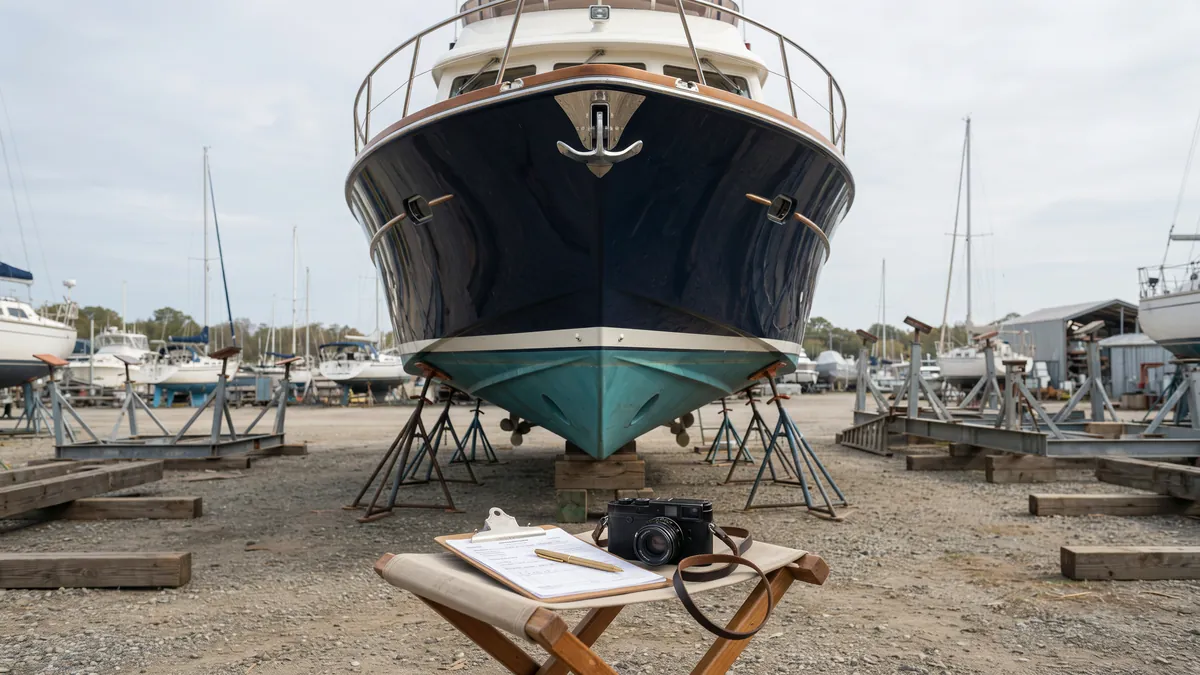
The survey is usually done with the yacht hauled out, so that the whole hull can be seen and touched. The surveyor looks for cracks, crazing, repairs and signs of impact, takes moisture readings across hull and deck, and taps for delamination, the separation of laminate layers or of skins from a core. Around deck fittings, windows, hatches and chainplates, where water finds its way into a cored deck, readings are taken with particular care.
The keel and the keel joint receive close attention. A weeping or cracked joint, rust stains from keel bolts or damage to the leading edge can point to a past grounding and to stress in the internal floors and the hull around them. The rudder is checked for play in its bearings, for moisture and for the condition of the stock. Through hulls and seacocks, shafts, propellers and the cutlass bearing are inspected, and deck fittings and windows are examined for leaks and failed sealant.
| Area | What the surveyor looks at | Often handled separately |
|---|---|---|
| Hull and deck | Cracks, repairs, moisture readings, tapping for delamination | No |
| Keel and rudder | Keel joint, bolts, signs of grounding, bearings and stock | No |
| Underwater fittings | Through hulls, seacocks, shafts, propellers, bearings | No |
| Rig | Visual check from deck, chainplates, fittings at deck level | Yes, a rig check aloft |
| Engines | Installation, condition, leaks, mounts, exhaust | Yes, an engine survey with oil analysis and test run |
| Systems | Electrics, plumbing, gas system, safety equipment | Sometimes, for complex installations |
| Sea trial | Behaviour under power and sail, systems under load | No |
The scope varies with the yacht and the surveyor. Agree it in writing before the survey starts.
Engines, rig and systems
Most hull surveyors look at the engines in general terms: the installation, mounts, leaks, hoses, exhaust and the overall state of the engine bay. For a detailed view, buyers often commission a separate engine survey, with an oil sample sent for analysis and a test run under load. The analysis can reveal wear metals, coolant in the oil or fuel dilution, signs that are invisible from the outside.
The rig is usually checked visually from deck: chainplates, the mast step, turnbuckles, terminals at deck level, the boom and the furlers. A separate rig check aloft, by a rigger or a surveyor who climbs, inspects the upper terminals, spreaders and masthead fittings. The surveyor also tests the electrics, looks at the wiring and batteries, checks the plumbing, inspects the gas system and its locker, and records the safety equipment with its service dates.
The sea trial
A sea trial shows what a yacht on stands cannot. The engines run under load for a meaningful time while temperatures and pressures are watched, and the surveyor listens for vibration and looks for leaks and smoke. Steering, autopilot, windlass and electronics are tested, and on a sailing yacht the sails are set, tacked and reefed. Afterwards the engine bay and the bilge are inspected again while everything is still hot.
By the end of the day, the yacht will have told a stranger far more about her life than any listing could.
Papers, ownership and tax
A sound yacht with uncertain papers is still a risky purchase. The survey, or your own checks alongside it, should cover:
- The builder’s plate and the CE documentation, including the design category under the EU Recreational Craft Directive 2013/53/EU
- Registration documents, with the registered details matched against the boat itself
- Proof of ownership and the chain of previous owners
- The VAT status in the EU, with the documents that prove it
- Confirmation that there are no outstanding debts, mortgages or charges against the boat
Where a broker is involved, ask early for copies of everything. In complex cases, a specialist in yacht registration or a lawyer familiar with yacht sales should look at the papers before you sign.
Reading the report and using it
A good report lists findings by urgency: safety issues that must be put right before the yacht goes to sea, items to deal with soon, and observations for the longer term. It is written for you, but insurers and lenders often read it too, so its recommendations matter well beyond the purchase.
Use the report calmly. It is rare for a used yacht to come through without findings, and many are minor. The serious ones are a basis for negotiation: a lower price, repairs completed by the seller before completion, or, if the findings are structural and the seller is unwilling, the decision to walk away. That decision, made with a clear report in hand, is sometimes the most valuable thing a survey ever gives.
Questions and answers
Can I rely on the seller’s recent survey?
It can be useful background, but it was written for someone else and at another time. A survey you commission yourself is independent, current and addressed to you, which also matters to insurers.
How long does a pre-purchase survey take?
It depends on the size and complexity of the yacht. A smaller yacht may take a day including the sea trial, while larger yachts with several engines and complex systems take longer. Ask the surveyor for an estimate when you agree the scope.
What happens if the survey finds serious problems?
You can renegotiate, ask the seller to complete repairs before the sale, or withdraw, depending on the terms of your purchase agreement. Many agreements are made subject to a satisfactory survey for exactly this reason.
Does the surveyor check the rig aloft?
Usually not as part of a standard survey. The rig is inspected from deck, and a separate check aloft by a rigger or a climbing surveyor is advisable for a complete picture.
Further reading in our network
- RanerisSuperyachts and charter
Superyachts and charter, for readers looking at larger yachts or wishing to sail one before they buy.
Our articles are general information written with care. Intervals and figures are guide values; the maker’s manual, your flag state, classification society and insurer take precedence, and safety critical work belongs with qualified professionals.