
Winter storage: indoor hall, outdoor cradle or afloat?
A heated hall, a cradle under a good cover or a berth in a mild harbour: each way of spending the winter has its own logic, and the right one depends on the boat, the climate and the work ahead.
Walk into a storage hall in January and the sound changes. The wind outside drops to a murmur, and rows of hulls stand in a soft, dusty light, masts racked along the wall, varnish dull but dry. Outside, on the hard, other yachts wear white covers that creak and breathe in the breeze. Down in the harbour a few stay afloat, lines doubled, fenders squeaking against the pontoon. Three ways to spend a winter, and each one makes sense for a different boat.
Indoor storage: the most shelter, the least space
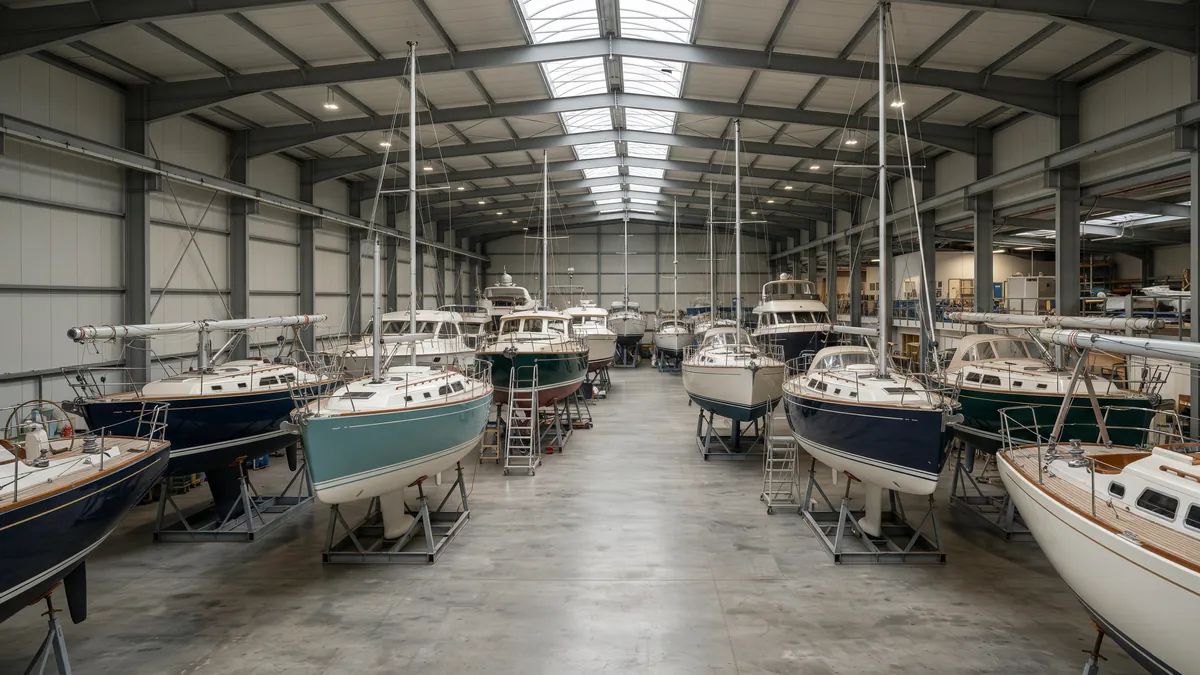
A hall protects the yacht from rain, frost, ultraviolet light, bird droppings and the grime of a long winter. Gelcoat stays glossy, varnish survives without the slow lifting that comes from months of wet and dry, and teak is spared the cycle of soaking and drying out. For yachts with a lot of brightwork, classic timber boats and anything with a demanding paint finish, indoor storage is usually the kindest choice.
Halls come heated and unheated. An unheated hall still keeps off the weather and most of the frost, though in a hard winter the systems must be winterised just as if the boat stood outside. A heated hall allows paint, varnish and resin work in the cold months, since many coatings need a minimum temperature to cure properly. The limitation is space: places are few, yachts are packed tightly, and the order in which boats come out in spring is fixed long before. If your yacht stands near the back, she leaves when the others have gone.
Outdoor on a cradle or stands
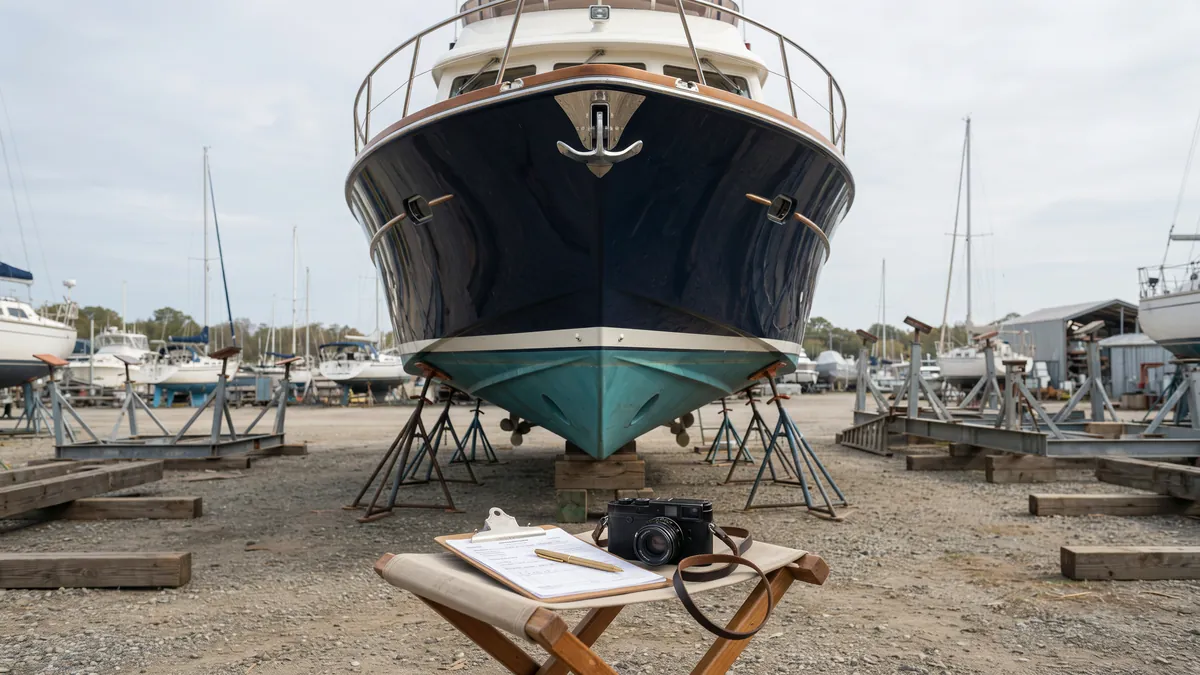
Most yachts in northern waters spend the winter ashore in the open, on a cradle or on stands with the keel blocked on timber. It is a sound arrangement when three things are right: the support, the cover and the drainage. The cradle or stands must suit the hull and be chained or braced as the yard requires, and the ground beneath must be firm enough not to settle after a week of rain.
The cover does most of the work. It should sit on a frame so it sheds water and snow rather than collecting them, and it needs vents so that moist air can escape. Breathable fitted covers last many seasons. Shrink wrap fits tightly and resists wind well, but it creates plastic waste every year and must have vents built in, or the interior becomes a greenhouse full of condensation. Ask whether the yard collects used wrap for recycling.
Then there is the mast. Leaving it stepped saves work and a crane slot, and the rig can be checked in place, but it adds windage and leaves the standing rigging exposed to the weather. Unstepping it allows a close inspection of the rig ashore, and some yards require it for yachts stored close together. The choice depends on the yard’s rules, the exposure of the site and the work planned for the rig.
Staying afloat
In mild climates such as the Mediterranean, many yachts stay in the water all year and are hauled only briefly for antifouling and anodes. The boat remains ready for a calm winter day, the antifouling and anodes keep working, and there is no lifting or storage to arrange. The hull does not dry out, which for some timber boats is an advantage in itself.
In colder regions a yacht can still winter afloat with the right precautions. Bubblers, which lift slightly warmer water from deeper down to the surface, keep ice from forming around the hull, and some heating may be needed below to keep systems safe. Mooring lines need chafe protection and enough slack for changing water levels, and the bilge pumps, batteries and charger must be reliable through the whole winter.
Mild does not mean calm. The Mediterranean winter brings strong winds, heavy rain and short, steep seas that find their way into harbours. Yachts left afloat need good covers, cockpit drains that are kept clear, doubled lines and a visit after every storm.
| Factor | Indoor hall | Outdoor ashore | Afloat |
|---|---|---|---|
| Weather and UV | Best protection | Depends on the cover | Full exposure above the waterline |
| Varnish and gelcoat | Kept in best condition | Good under a framed cover | Needs covers and regular care |
| Winter works | Possible, heated halls allow coatings | Possible under cover, weather permitting | Limited, mostly above the waterline |
| Frost risk | Low in heated halls | Full winterising needed | Bubblers and heating in cold regions |
| Antifouling and anodes | Out of action | Out of action | Keep working |
| Space and access | Scarce, fixed spring order | Usually more flexible | Boat can be used on calm days |
A general comparison. Local conditions, yard rules and insurance terms decide in each case.
Questions to settle before you sign
Whichever option looks best on paper, a handful of practical points often decide it in the end.
- Insurance conditions. Policies may state where and how the yacht is laid up, whether the mast must come down and whether someone must check her regularly. Read the lay up clause before you choose.
- Access for winter works. Can your own contractors work on the boat, are power and water available, and during which hours is the site open?
- Security. Fencing, lighting, a locked gate and someone on site make a real difference over long, dark months.
- Drainage. A yard that floods in heavy rain is no place for stands that rely on firm ground.
- Wind exposure. An open site on a headland is very different from a sheltered corner behind a shed, both for the cover and for the stands.
Mild does not mean calm.
Matching the option to the boat
As a rough guide, a classic timber yacht or a boat with a lot of brightwork benefits most from a hall, especially when winter works are planned. A modern glass fibre cruiser in a northern climate usually does well ashore under a good, framed cover. A yacht in a mild southern harbour, used through the year, often stays afloat and comes out briefly in spring or autumn. Many owners combine the options: a few weeks ashore for antifouling and underwater work, then back in the water for the rest of the winter.
Whatever you choose, the yacht still needs to be prepared for the cold and checked through the season. Storage only decides where she waits. The care that goes into the waiting is the same everywhere.
Questions and answers
Is shrink wrap better than a fitted cover?
Shrink wrap is tight and wind resistant, but it is used once, creates plastic waste and must be vented to avoid condensation. A fitted, breathable cover on a frame takes more effort to make at the start and lasts many winters. For yachts stored in the same place every year, a fitted cover is often the more sensible choice.
Can I leave the mast up over winter?
Often, yes, provided the yard allows it and the site is not too exposed. A stepped mast adds windage and leaves the rig to the weather, while taking it down allows a closer inspection ashore. Check your insurance conditions as well.
Does a yacht kept afloat in the Mediterranean need winterising?
Usually less than in the north, since hard frost is rare on the coast. The systems still need care, and covers, lines, drains and bilge pumps matter all the more because of winter storms and heavy rain.
When does a heated hall make sense?
Above all when paint, varnish or resin work is planned for the winter, and for timber boats and fine finishes. For a yacht that only needs to wait for spring, an unheated hall or a good place outdoors is usually enough.
Further reading in our network
- Costa del SolCoast and lifestyle
Coast and lifestyle on the Costa del Sol, for owners who like to spend the mild months close to the sea and their yacht.
Our articles are general information written with care. Intervals and figures are guide values; the maker’s manual, your flag state, classification society and insurer take precedence, and safety critical work belongs with qualified professionals.