
Saildrive service: diaphragm, oil and the aluminium leg
A saildrive is neat, quiet and efficient, but it puts a rubber seal and an aluminium casting where the sea is. Here is what it asks for every year and every few years.
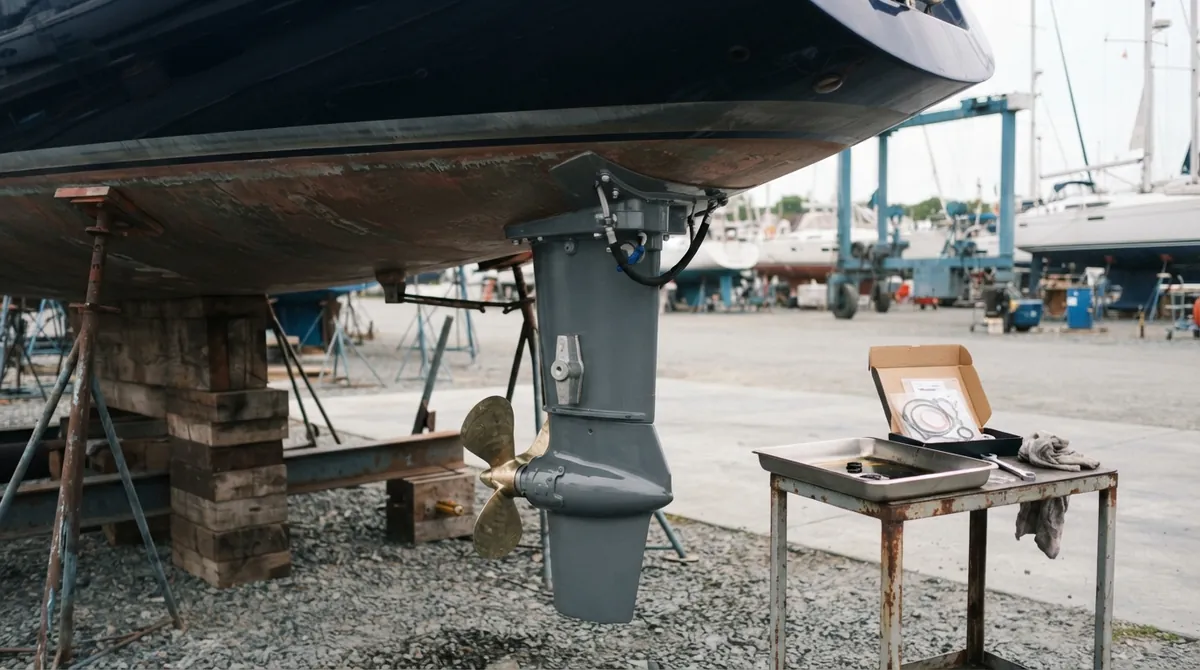
Under the hull of many modern cruising yachts, just aft of the keel, hangs a short leg with a folding propeller at its foot. It looks tidy, almost modest, beside the rudder. Inside the boat the engine sits directly above it, with no long shaft, no stuffing box and no alignment to fuss over. The saildrive is a clever piece of engineering, but it concentrates the meeting of sea and machinery in a single large rubber seal and a cast aluminium leg, and both need an owner who understands them.
How a saildrive meets the hull
A conventional shaft passes through the hull at a small seal around a turning shaft. A saildrive instead passes through a large opening in the bottom of the boat, and the gap between leg and hull is closed by a rubber diaphragm seal. The diaphragm is a flexible ring that also absorbs vibration, and it is one of the most important seals on the boat. On some designs it has two layers with a water sensor between them that raises an alarm if the outer layer leaks. A single ring of rubber is all that stands between the sea and the inside of the boat.
Makers give a replacement interval for the diaphragm, often around seven years, regardless of how it looks, because rubber ages from ozone, oil, heat and time. The job is done with the boat out of the water and the engine and leg lifted, or the leg removed, which makes it a natural companion to other engine room work. It belongs with an experienced yard following the maker’s procedure, because a badly seated diaphragm is a direct path for the sea.
A single ring of rubber is all that stands between the sea and the inside of the boat.
The yearly checks
Most saildrive care fits into the normal annual service and the haul-out. The list is short, but each item matters.
- Gear oil level and colour. Check it with the dipstick or sight glass, and look closely at the oil itself.
- Oil change. At the interval in the manual, often yearly, with the grade and quantity specified.
- Lip seals on the propeller shaft. Look for weeping oil around the shaft.
- Anode. Inspect the leg anode and renew it when worn, using the type the maker specifies.
- Leg paint. Look for chips, blisters and bare aluminium, especially at the leading edge and the foot.
- Diaphragm. Inspect its inside edge for cracks or perishing, and note its age in the log.
What milky oil is telling you
Healthy gear oil is clear and the colour the oil maker intended. Milky, creamy or grey oil means water has mixed with it, and on a saildrive that water usually comes in through the lip seals on the propeller shaft. Left alone, it corrodes the bearings and gears inside the leg. Change the oil, then watch: if it turns milky again soon, the seals need renewing, which usually means the boat comes out of the water.
The most common reason for damaged lip seals is something wrapped around the shaft. Fishing line is the classic culprit: fine monofilament winds tightly into the gap between propeller and leg, softens with friction and cuts into the seals without the crew ever noticing. At every haul-out, look closely for line in that gap, removing the propeller if needed.
Aluminium, anodes and the right antifouling
The leg is cast aluminium, and aluminium in seawater is vulnerable. It sits beside a bronze or stainless propeller and a stainless shaft, and without protection it would corrode quickly. The leg anode does that work, and it must be the type and alloy the maker specifies; the wrong anode may protect too little. If anodes waste unusually fast, ask a marine electrician to check for stray current and the shore power connection.
Antifouling is where many saildrives are harmed by good intentions. Only an antifouling suitable for aluminium may be used on the leg, which in practice usually means a copper free product, because copper in contact with aluminium encourages corrosion. Painting the leg with the same copper based antifouling as the hull can start corrosion beneath the paint. The paint maker’s data sheet states whether a product is suitable for aluminium.
Damaged paint on the leg should be repaired properly rather than touched up over bare metal. The usual order is to clean and key the area, treat the bare aluminium with a suitable primer system and build up the coats before the antifouling goes on.
| Problem | Likely cause | Typical repair |
|---|---|---|
| Small chips at the leading edge | Debris, lifting slings, a light grounding | Clean, key, prime with a system for aluminium, rebuild the coats |
| Blisters or white powder under paint | Corrosion of the aluminium beneath | Remove paint to sound metal, assess, then a full primer system |
| Paint flaking over a wide area | Unsuitable product or poor preparation | Strip and repaint the leg with a suitable system |
| Pitting near anode or propeller | Worn anode or stray current | Renew the anode and have the electrical system checked |
Paint systems and preparation follow the paint maker’s data sheet.
Folding propellers on a saildrive
Folding propellers are often used on saildrives because they close neatly behind the leg under sail and reduce drag. Hinge pins and gear teeth should move freely, both blades should open evenly, and the propeller should be greased if the maker asks for it. A blade that opens late or unevenly causes vibration, which travels straight into the leg and the diaphragm. Barnacles inside the hub can stop a folding propeller opening at all, so clean it carefully at every haul-out.
What belongs to the yard
An owner can check the oil, look at the anode, inspect the paint and keep an eye on the diaphragm from inside. Changing the gear oil is often manageable too. Renewing lip seals, replacing the diaphragm and any work that involves lifting the engine or removing the leg are jobs for an experienced yard, working to the maker’s manual and torque settings. Ask the yard to record the date of the diaphragm change in the logbook and, where practical, on a label near the saildrive, so that the next owner or engineer does not have to guess.
Questions and answers
How often should the saildrive diaphragm be replaced?
Makers give an interval, often around seven years, whatever the seal looks like. The job needs the boat out of the water and the engine and leg lifted or the leg removed. Check your manual and the date in the log.
My saildrive oil is milky. Can I keep motoring?
Milky oil means water in the gear oil, which damages bearings and gears. Change the oil as soon as possible and check it again soon after. If it turns milky again, the seals need renewing before longer use.
Can I use my hull antifouling on the leg?
Only if the paint maker states that it is suitable for aluminium. Many hull antifoulings contain copper, which can cause corrosion on an aluminium leg. Use a product made for aluminium.
Our articles are general information written with care. Intervals and figures are guide values; the maker’s manual, your flag state, classification society and insurer take precedence, and safety critical work belongs with qualified professionals.