
Antifouling explained: hard, eroding and copper free coatings
Which bottom paint suits a boat that sits for weeks, and which one suits a fast boat that runs every weekend? A calm guide to coating types, compatibility and a clean application.
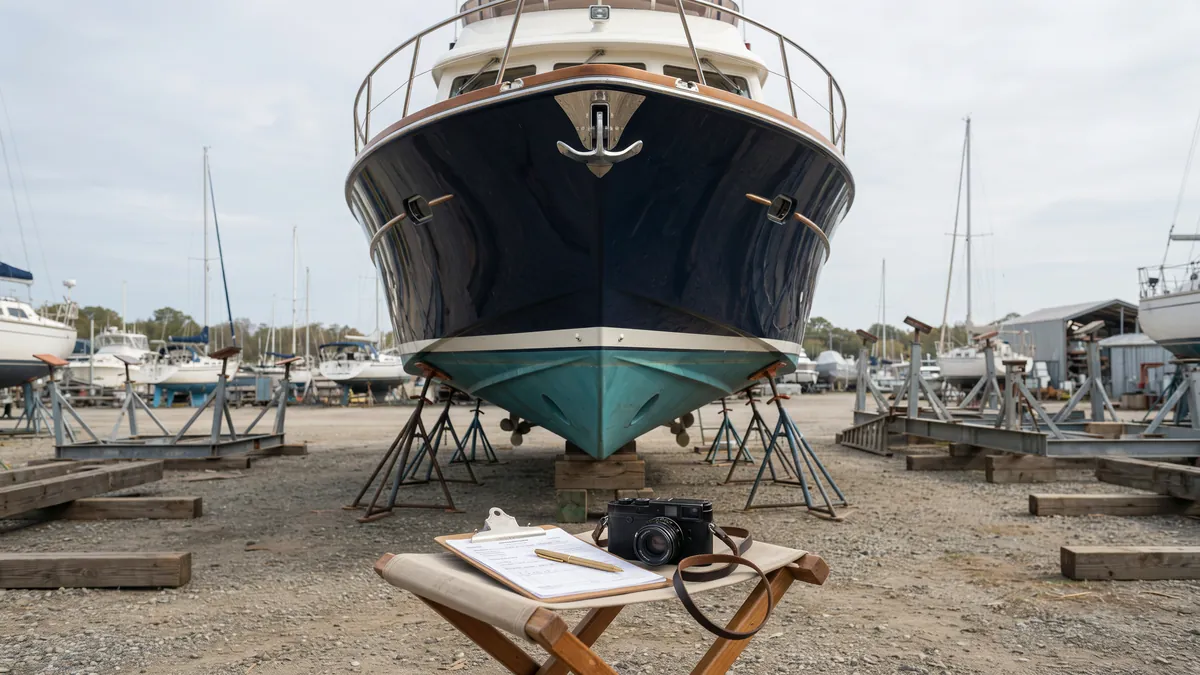
The first minutes of a haul out tell you how well last year’s antifouling did its job. The travel hoist lifts the hull clear, water streams off the keel, and before the pressure washer starts you see it all: a soft green beard along the waterline, a brown film of slime further down, perhaps a crust of small barnacles on the leading edge of the rudder. A good coating leaves little to wash off. A poor choice, or a good paint badly applied, leaves the yard team scraping for an afternoon.
What fouling costs you on the water
Fouling starts invisibly. Within days of launching, a thin layer of bacteria and algae settles on any surface in the water, and this slime gives weed spores and barnacle larvae something to hold on to. Each stage makes the hull rougher. A rough hull drags more water with it, so a sailing yacht loses speed and pointing ability, and a motor yacht needs more throttle and burns more fuel for the same cruising speed. On propellers the effect is sharper still, because a few barnacles on a blade disturb the flow and can cause vibration and cavitation. Antifouling exists to keep that whole chain from starting, or at least to slow it down until the next haul out.
The four families of coating
Most bottom paints fall into one of four groups, and the differences between them matter far more than the colour on the tin.
| Type | How it works | Suits |
|---|---|---|
| Eroding or self-polishing | The surface wears away slowly as water flows past, releasing biocide and exposing fresh paint | Boats that sit for longer periods, cruising yachts, mixed use |
| Hard | A tough film stays on the surface while the biocide leaches out; it can be burnished smooth | Fast boats, racing yachts, boats that are scrubbed during the season |
| Copper free biocide | Uses other biocides instead of copper, in eroding or hard form | Aluminium hulls, drives and waters with copper restrictions |
| Biocide free foul release | A very smooth silicone based surface that gives organisms little grip; fouling washes off with speed | Propellers, faster boats and owners who want to avoid biocides |
Guide only. The maker’s data sheet decides which coating suits which hull and which conditions.
Eroding coatings are forgiving for boats that spend weeks on a mooring, because the surface keeps renewing itself, although they work best with some water flow. Because they wear away, old layers build up less over the years. Hard coatings do not wear in the same way, which makes them durable on fast hulls but means that layer after layer accumulates. Foul release coatings work differently again: they do not poison anything, they simply give fouling no hold, and they are at their best on boats that move often and at speed.
Choosing for the way your boat really lives
Start with honest answers about your season rather than with a product. How many weeks will the boat sit without moving? Is she kept in salt, brackish or fresh water? How fast does she run, and is she scrubbed during the season? A classic sailing yacht on a swinging mooring in a warm bay asks for something quite different from a planing motor boat that runs at speed every weekend.
- Long periods at rest: an eroding coating usually keeps the hull cleaner between short trips.
- High speed: a hard coating, or foul release on hull and running gear, resists the scouring of fast water.
- Aluminium hull: copper based antifouling must never be used; a copper free coating approved for aluminium is the only choice.
- Propellers and shafts: ordinary antifouling rarely stays on long, while a foul release system made for running gear lasts far better.
- Fresh water or sensitive waters: check which biocides are permitted before you order anything.
Rules, bans and local restrictions
Antifouling is one of the most closely regulated products on a boat, and for good reason. Organotin coatings based on TBT were once very effective, but they caused serious harm to shellfish and other marine life. Under the IMO convention on antifouling systems, which came into force in 2008, they are banned worldwide. Since then, rules have continued to tighten region by region. Some countries restrict or forbid biocidal antifouling in fresh water, and parts of the Baltic have their own limits on copper and other active substances. If you cruise across borders, the paint that is accepted at your home berth may not be welcome everywhere, so ask the yard or the harbour authority about current local rules before the season’s paint is ordered.
Changing type: compatibility comes first
Switching from one family to another is where many bottom jobs go wrong. Fresh paint is only as good as the layer beneath it, and some combinations simply do not bond. A hard coating applied over a soft eroding one may crack and flake as the softer layer underneath keeps moving. Foul release systems need their own primer and tie coat and usually cannot go over old biocide paint at all.
If you do not know what is on the hull, find out before you buy. An experienced yard can often identify the type from its feel and its reaction to a solvent rub, and old records help enormously. Where the existing coating is sound but incompatible, a sealing primer may isolate it. Where years of layers have built up into a thick, cracked crust, it is better to remove everything, by careful blasting or chemical stripping, and start again on a clean, sealed surface.
Application: coats, edges and timing
The tin and its data sheet are your best guides here. They give the number of coats, the coverage, the minimum and maximum overcoating times and the window in which the boat must be launched after the last coat. Some eroding paints lose effectiveness if they stay dry too long, while others need a minimum cure before immersion.
- Wash and dry the hull, then sand or key the old coating as the system requires.
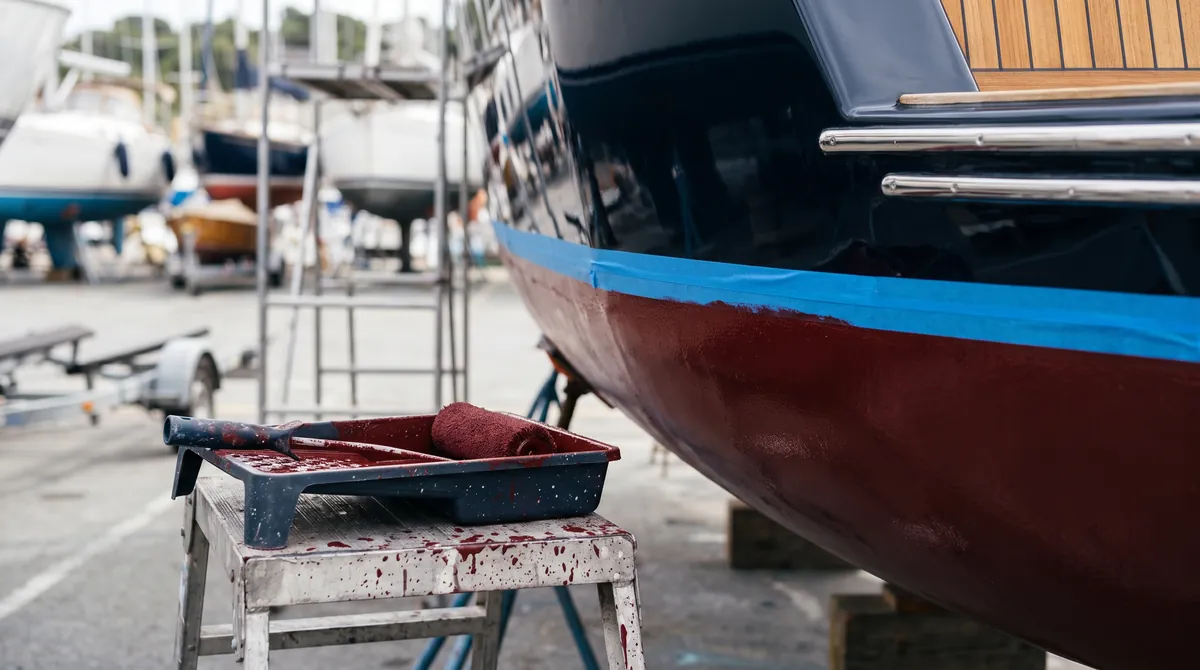
- Mask the boot top with a sharp line, and protect anodes, transducers and the propeller.
- Apply the first coat within the temperature and humidity range on the data sheet.
- Add an extra coat at the waterline, at the bow and on the leading edges of keel and rudder, where water flow wears paint fastest.
- Respect the overcoating interval before each further coat.
- Pull the masking tape while the last coat is still soft enough to leave a clean edge.
- Launch within the time window given by the maker.
Dust, scrapings and your health
Old antifouling is designed to be toxic, and so is the dust it makes. Dry sanding without protection is one of the worst habits on any boatyard. Use a sander connected to dust extraction, or sand wet where the system allows it, and wear a suitable mask, gloves, eye protection and disposable overalls. Lay sheeting under the hull to catch scrapings and dispose of them as hazardous waste through the yard. Many yards now insist on these measures, and they protect the soil and water around the yard as much as the person holding the sander.
The best antifouling is not the strongest one, but the one that matches how your boat actually lives.
Once the right family has been chosen and applied with care, the rest is routine. Look at the hull at every lift, note how the coating performed and where it failed first, and adjust the choice when your cruising area or your season changes. A clean bottom is never an accident.
Questions and answers
Can I put a hard antifouling over an eroding one?
Usually not without preparation. The softer layer underneath keeps moving and can make the hard coating crack or flake. Follow the maker’s compatibility advice, and use a sealing primer or remove the old paint where required.
How many coats do I need?
Follow the data sheet, which commonly calls for two coats over a sound base. An extra coat at the waterline, the bow and the leading edges of keel and rudder is good practice, because these areas wear fastest.
Is copper free antifouling effective enough?
Modern copper free coatings can work well, particularly in areas with moderate fouling. Results depend on the water, the season and how the boat is used, so local experience from your yard is valuable.
Why does my propeller foul so quickly?
Ordinary antifouling struggles to stay on fast turning metal. A foul release system made for running gear, applied over the correct primer, usually performs much better.
Our articles are general information written with care. Intervals and figures are guide values; the maker’s manual, your flag state, classification society and insurer take precedence, and safety critical work belongs with qualified professionals.