
Topside paint: two-pack polyurethane, spraying or roll and tip
When tired gelcoat or a new colour calls for paint, the gloss you admire at the end is mostly made by work nobody sees. Preparation, conditions and method, explained.
In a well run paint hall the moment arrives quietly. The last coat has gone on, the fans have been turned down, and the hull stands under the lights with a surface so deep and wet that the strip lamps above are reflected in it as straight, unbroken lines. Nobody touches anything. Behind that moment lie weeks of sanding, filling and priming, a constant watch on temperature and humidity, and a small team who know that a drop of sweat or a speck of dust can spoil an afternoon’s work.
When paint makes sense
Topsides are painted for a few clear reasons. The gelcoat may have oxidised and chalked beyond what polishing can recover. It may be crazed, or patched by so many repairs that no single colour matches any more. Or the owner simply wants a different colour, perhaps a dark hull on a classic design or a softer shade than the builder’s white. Paint is a commitment, though. Once the topsides are painted, they will need repainting in future rather than polishing back to gelcoat, so it is worth being sure first that a professional polish or a few careful gelcoat repairs would not be enough.
Two-pack or single pack
The choice of paint system shapes both the result and its life.
| Property | Two-pack polyurethane | Single pack paint |
|---|---|---|
| Hardness and durability | Very hard, long lasting finish | Softer, wears and dulls sooner |
| Gloss | High, deep gloss that holds for years | Good gloss when new, fades faster |
| Ease of use | Exact mixing, limited pot life, needs skill | Ready to use and forgiving for owners |
| Health | Contains isocyanates; spraying is professional work | Lower hazard when brushed or rolled |
| Touching up | Harder to blend in invisibly | Easier to repair locally |
General comparison; the paint system’s data sheets decide primers, coats and intervals.
Two-pack polyurethane is the standard for a yacht finish that should last many seasons. Single pack paints suit smaller boats, older craft with more flexible substrates and owners who want to do the work themselves and accept refreshing it more often.
Preparation is most of the job
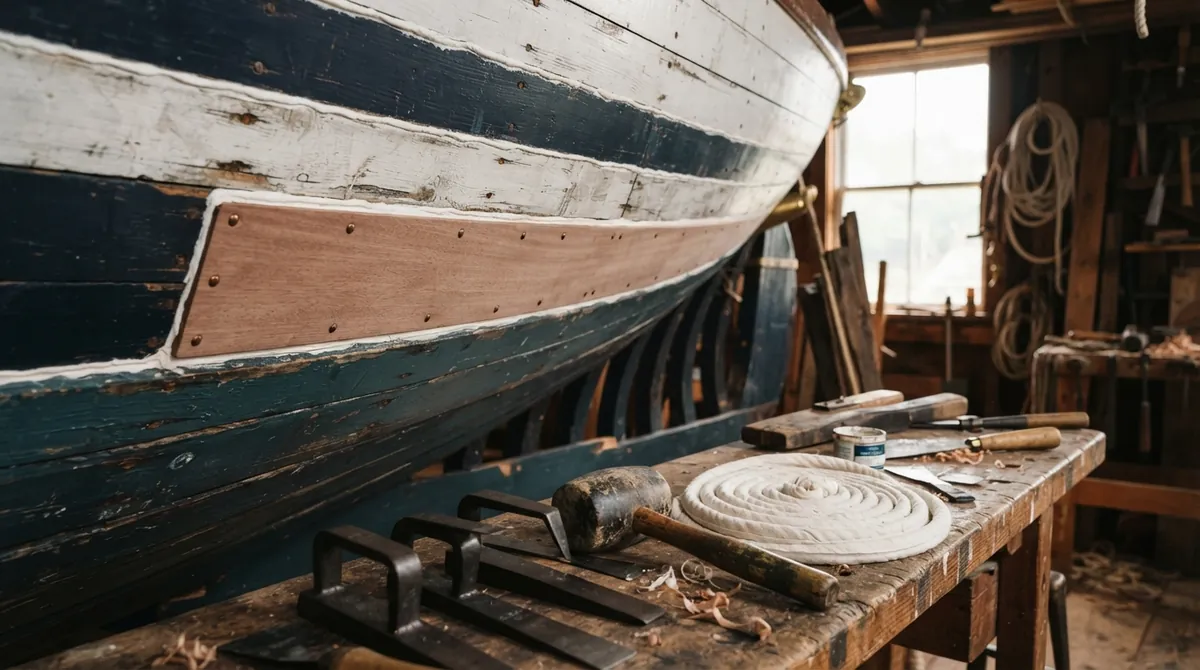
Any painter will tell you that the visible coats are the shortest part of the work. Paint does not hide defects; a high gloss finish exaggerates them. The order of work matters, and a skipped step tends to show months later as poor adhesion or a ripple in the reflection.
- Dewaxing: the old surface is cleaned with a dewaxing solvent, because residues of mould release agent, polish and wax prevent adhesion.
- Sanding: the gelcoat or old paint is sanded to give a key, and loose or failing areas are removed.
- Filling: chips, dents and old fixing holes are filled with a suitable epoxy filler.
- Fairing: waves and hollows are taken out with long boards, so the hull reflects light evenly.
- Primers: primer and undercoat layers seal the surface and build a uniform base, each sanded smooth.
- Topcoats: usually two or more coats, with fine sanding between them where the system calls for it.
Spraying or roll and tip
Professional spraying in a paint hall gives the most even, glass-like result. The hall controls temperature and humidity, filters the air and keeps dust away from the wet film. Spray application of paints that contain isocyanates, however, requires full respiratory protection with supplied air and proper protective clothing. It is a job for trained professionals in a booth, never something to attempt on an open boatyard with a simple dust mask.
Roll and tip is the traditional hand method, and in skilled hands it produces a finish that comes remarkably close to spraying. Two people work together along the hull. One rolls a thin, even coat over a short section; the other follows straight away and tips it off with long, light strokes of a fine brush to remove the roller texture and any bubbles. They keep a wet edge, work from top to bottom and never go back into paint that has begun to set. It is slower than spraying and needs calm, warm, dust free conditions, but it avoids the hazards of spray mist.
Temperature, humidity and the dew point
Two-pack paints are particular about their conditions. The most important rule concerns the dew point, the temperature at which moisture in the air condenses on a surface. The surface being painted must be well above it, commonly at least 3 °C, or an invisible film of moisture will spoil adhesion and gloss. Early mornings in spring and autumn are the classic trap: the air may feel dry, but a hull that has cooled overnight can sit right at the dew point.
- Measure the surface temperature with a surface thermometer, not just the air.
- Check the relative humidity and work out the dew point before each coat.
- Stay within the minimum and maximum temperatures on the data sheet.
- Avoid starting late in the day if the temperature will fall before the film has set.
- Keep draughts and dust away from the hull while still providing the ventilation the system needs.
Dark colours and honest surfaces
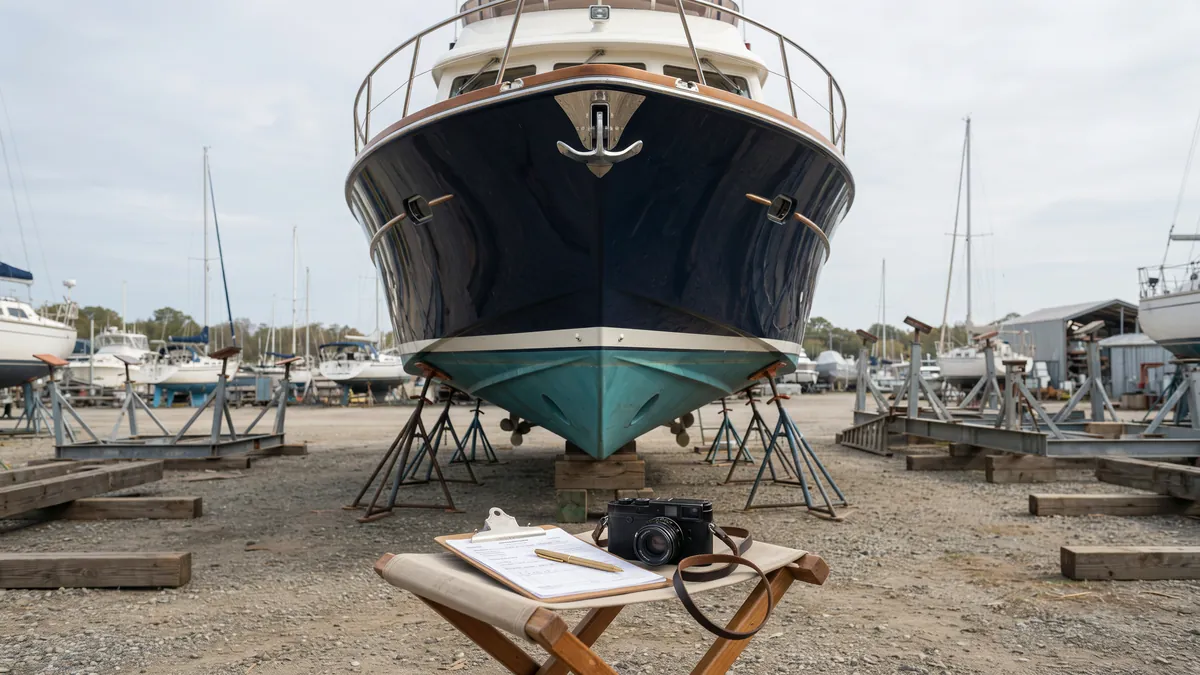
Dark blue, green or black topsides look wonderful on a classic hull, but they come with conditions. Dark colours absorb far more heat in the sun, which strains the laminate, the core of a sandwich hull and the paint itself. They also show every flaw. A slight wave in the topsides that would go unnoticed in white becomes plainly visible in a dark gloss. A dark finish therefore demands an even higher standard of fairing, and a good yard will tell you honestly whether your hull’s construction suits it.
Paint does not hide a hull’s flaws; a deep gloss shows every one of them.
Care after the last coat
Fresh two-pack paint reaches its full hardness over days or weeks, so it needs gentle treatment at first. Wash it with fresh water, mild soap and a soft brush or sponge. Avoid abrasive polishes and cutting compounds on new paint, because they dull the very gloss that took so much effort to create. Use clean fender covers, take care in locks and alongside rough walls, and rinse off salt and bird droppings promptly. Looked after in this way, a good two-pack finish keeps its depth for many years.
Questions and answers
Can I paint my topsides myself?
Single pack paint, or two-pack applied by roll and tip, is possible for skilled owners with good conditions and the right protection. Spraying two-pack paints containing isocyanates must be left to professionals in a booth.
How long does a two-pack finish last?
With good preparation and careful care, a two-pack polyurethane finish commonly lasts many seasons. Sun, abrasion and the quality of the preparation decide how long it keeps its gloss.
Is a dark hull a good idea?
It can look superb, but dark colours absorb more heat and show every flaw. Ask the yard whether your hull’s construction suits a dark colour and plan for a higher standard of fairing.
How should I clean new paint?
Use fresh water, mild soap and a soft brush or sponge. Avoid abrasive polishes and cutting compounds, especially while the paint is still hardening.
Further reading in our network
- ClassicsHeritage and collector cars
Heritage and collector cars, where deep paint and patient preparation are valued just as highly as on a well kept yacht.
Our articles are general information written with care. Intervals and figures are guide values; the maker’s manual, your flag state, classification society and insurer take precedence, and safety critical work belongs with qualified professionals.