
Full refit or partial refit: how to decide what your yacht needs
One yacht gets fresh paint and new teak, her sister is stripped to the bare hull. How survey, plans, access and the order of work point to the right scale.
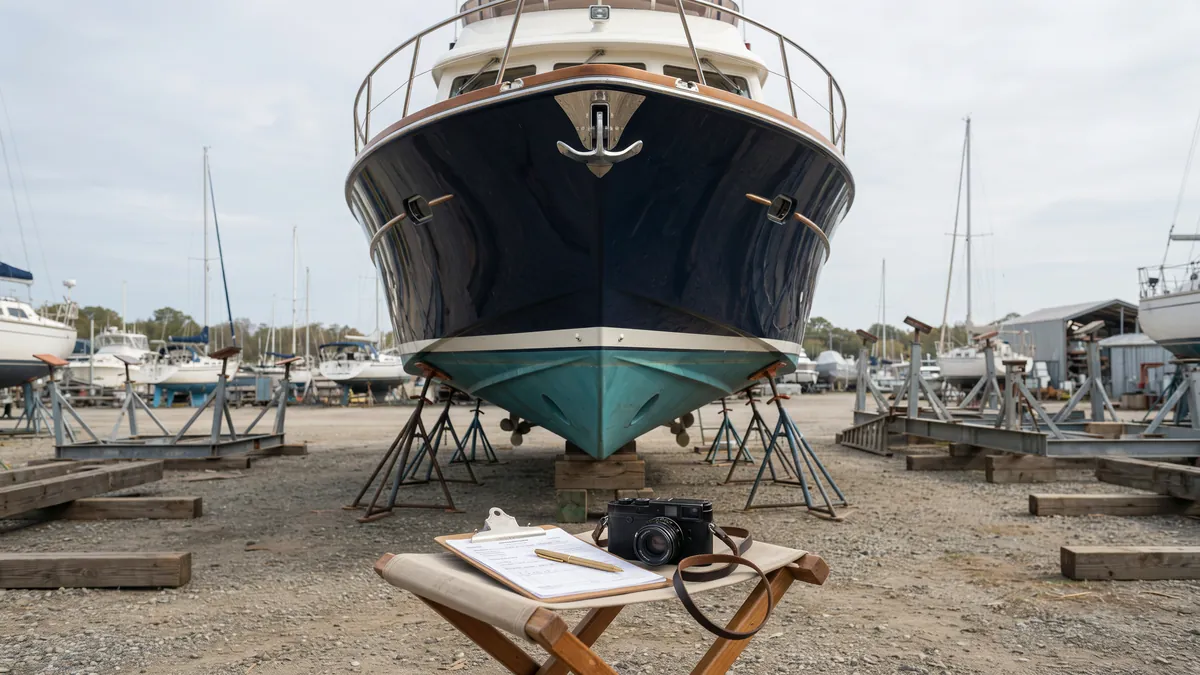
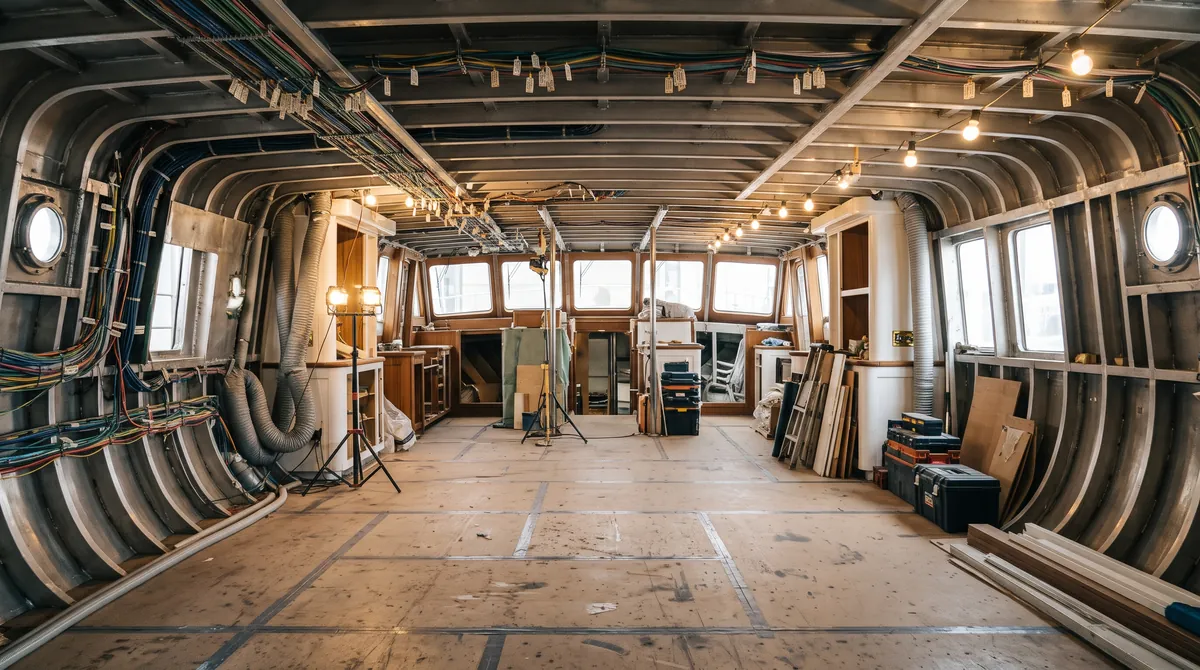
Two yachts of the same design stand side by side in a winter shed. One has her topsides masked for paint and a new teak deck laid out in numbered strips on trestles beside her. The other is almost unrecognisable: interior stacked in a container outside, engine on a pallet, wiring pulled out in grey coils, the bare hull lit from inside by work lamps. Same builder, same age, very different decisions. Neither owner is wrong, and the reasons behind each choice are worth understanding before you decide on your own.
Two words, two very different projects
A partial refit addresses chosen systems or areas of the yacht. Typical examples are paint and teak, engines and electrics, or a new rig with deck hardware. The rest of the boat stays as it is, and the yacht usually spends a single winter in the yard.
A full refit strips the yacht down to hull and structure and renews most systems and the interior. Tanks, wiring, plumbing, machinery, joinery and often the deck come out or are rebuilt. It is a different kind of project: longer, more complex to manage, and much closer to building a new boat inside an existing hull. Between the two lies a broad middle ground, and many good refits sit somewhere in it.
The survey sets the starting point
The first factor is the yacht herself. Age is a guide, but condition is the fact. A well maintained twenty year old boat may need only a careful partial refit, while a neglected ten year old may hide wet cores, tired wiring and corroded tanks. A thorough condition survey, carried out with the yacht out of the water, tells you which systems are near the end of their life and which still have years in them.
Pay close attention to systems for which spare parts are no longer available. An old engine, a discontinued electronics network or an obsolete hydraulic unit may still work today, but if one failure means a long search for parts, it pushes the decision towards renewal. Several such systems together are one of the clearest signs that a full refit is near.
Your plans for the yacht
The second factor is you. Be honest about how long you plan to keep the yacht and how you will use her. An owner who expects to sell within two or three seasons has little reason to rebuild systems a buyer will never see. An owner who plans an ocean crossing, a long season of family cruising or years of ownership has every reason to renew what the survey flags, because reliability far from a yard is worth a great deal.
Consider the value of the yacht after the work, too. Money spent on a refit is not automatically recovered on resale, and a full refit of a modest boat can cost more than the finished yacht will be worth. That does not make it a mistake, if the boat is the one you love and plan to keep, but it should be a conscious choice rather than a surprise.
Shared access: the hidden argument for doing more
The third factor is often decisive, and it is about access. Many jobs share the same doorway into the boat, and opening that doorway is a large part of the work. When it is open, doing a neighbouring job costs far less than opening it again in a few years.
| When this is open | Consider doing at the same time |
|---|---|
| Interior joinery and headliners removed | Renewing wiring, deck fitting rebedding from below, insulation, hull inspection behind the linings |
| Cabin soles lifted | Tanks, bilge pumps, limber holes, keel bolts and floors, plumbing runs |
| Engine removed | Engine beds, fuel lines, exhaust, engine room insulation, ventilation, shaft and stern gear |
| Mast unstepped | Standing rigging, mast wiring, sheaves, mast step and the structure beneath it |
| Topsides stripped for paint | Rebedding windows and deck hardware, gelcoat or plating repairs, new hull fittings |
Shared access is a reason to look closely, not a reason to renew everything automatically.
The most expensive job on a yacht is often the one that has to be opened twice.
An order of work that saves double work
Whatever the scale, the sequence matters. Doing work in a logical order prevents finished surfaces from being damaged or opened again, and it is one of the best reasons to plan a larger refit as one project rather than a string of separate jobs.
- Structure before paint: deck cores, chainplates, floors and keel joint first, coatings afterwards.
- Systems before linings: wiring, plumbing and hoses before headliners and wall panels go back.
- Engine work before new soles: machinery in and aligned before the cabin floor is finished.
- Deck hardware before deck finish: rebedding and new fittings before a new deck or fresh non slip paint.
- Cosmetics last: upholstery, varnish and polishing once the dust has settled.
The life cycle of a well kept yacht
It helps to see any refit as one stage in a long cycle. Annual maintenance keeps the yacht safe and pleasant from season to season. A mid life refit, often when the original systems begin to wear out together, renews engines, electrics, sails or rig and refreshes the cosmetics. A major refit, much later, takes the yacht back to her structure and gives her a second life. Owners who keep good records and do the annual work well find that the larger stages arrive later and with fewer surprises.
The phased refit: several winters, one plan
A phased refit over several winters is a valid alternative when time on the water matters, or when the work is too much to absorb at once. It works when there is one overall plan and each phase follows the logical order. Safety and structure come in the first winter, systems in the next, cosmetics last. The risk is losing the thread between phases, so keep the specification, survey and photo record in one place, and avoid closing up an area this winter that next winter’s phase will have to open again.
Questions and answers
How do I know whether my yacht needs a full refit?
A condition survey is the starting point. If several major systems are near the end of their life, parts for old equipment are hard to find and the interior must come out to reach the work, a full refit becomes the logical choice.
Does a full refit increase the value of a yacht?
It usually improves saleability and reliability, but the money spent is not automatically recovered on resale. A full refit makes most sense when you plan to keep and use the yacht for years.
Can I live with old systems if they still work?
Often yes, if they are safe and spare parts remain available. Systems with no parts left and a failure that would end a season deserve a closer look, especially before long passages.
Is a phased refit more expensive overall?
It can be, because some work such as access, protection and setting up is repeated. A good overall plan keeps that repetition small, and phasing gives you time on the water between stages.
Further reading in our network
- RanerisSuperyachts and charter
Superyachts and charter, with a view of how larger yachts move through their refit cycles.
Our articles are general information written with care. Intervals and figures are guide values; the maker’s manual, your flag state, classification society and insurer take precedence, and safety critical work belongs with qualified professionals.