
Planning a yacht refit: from first survey to sea trial
A good refit is decided long before the first grinder starts. How to turn a survey and a wish list into a plan, a contract and a schedule that holds.
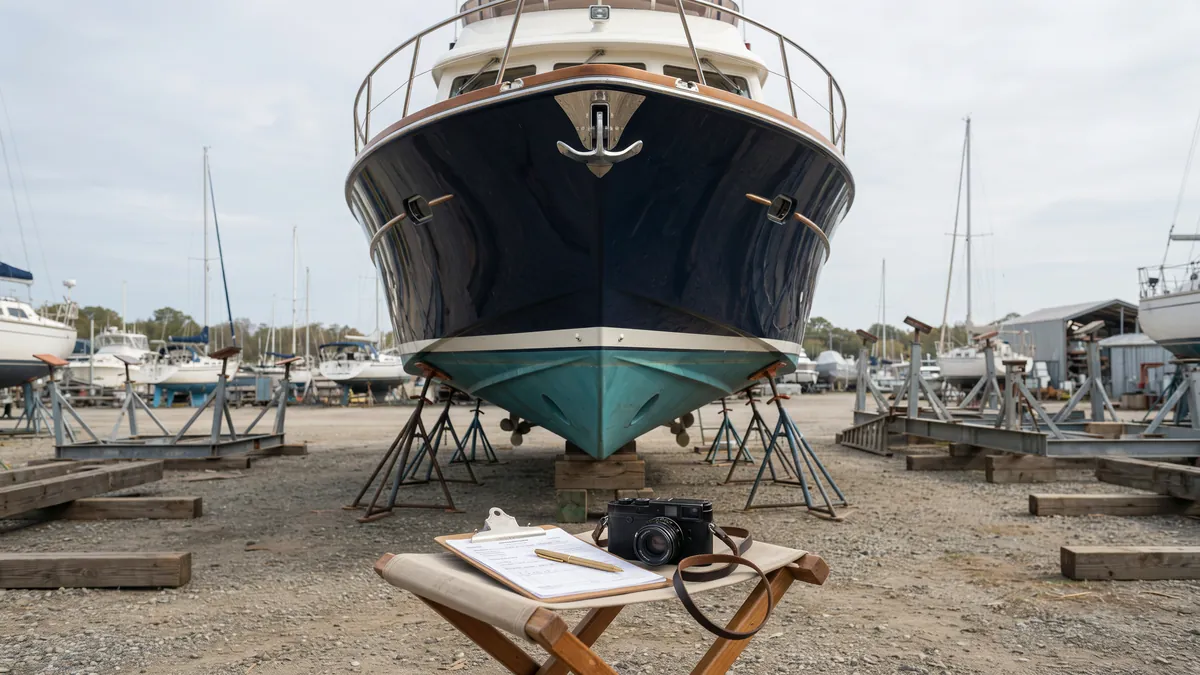
Late in the summer, a yacht stands on her cradle in the corner of a yard, still wearing a faint line of weed along the boot top. The surveyor works slowly down the hull with a torch and a small plastic hammer, tapping, listening, writing. Inside, the owner sits at the saloon table with a notebook full of ideas: new upholstery, a larger battery bank, perhaps a fresh colour for the topsides. Between that notebook and the surveyor’s findings lies the whole art of planning a refit, and it begins months before the first grinder is switched on.
Start with the boat as she is
Every sound refit plan rests on a condition survey carried out with the yacht out of the water. Only on land can you see the keel joint, the rudder and its bearings, the shaft and propeller, the through hull fittings and the true state of the coatings below the waterline. A good surveyor also looks inside: at floors and bulkheads, at chainplates, at the engine beds, at wiring that three previous owners have extended in three different styles. Ask for a written report that lists findings by urgency and says exactly where each one is, so that every finding can later become a numbered line in the specification.
The wish list belongs beside the survey, not in front of it. Write down everything you would like, from the practical to the purely aesthetic, and be honest with yourself about why you want it. Some wishes turn out to be easy to combine with necessary work; others collide with it. A beautiful new saloon sole makes little sense if the survey suggests that the tanks beneath it will need replacing within a season or two.
Four piles: safety, structure, systems and cosmetics
Once survey and wish list sit side by side, sort every item into one of four groups. The order matters, because it is also the order in which attention, time and money should be committed.
| Group | What belongs here | How to treat it |
|---|---|---|
| Safety | Seacocks, gas installation, steering, fire protection, safety gear, anything that could sink the boat or injure someone | Not negotiable: done in this refit, to the standard the surveyor or flag state expects |
| Structure | Keel joint, wet deck core, chainplates, cracked floors, wasted steel plating, rot in wooden frames | Done before anything that covers it, because paint and joinery cannot hide structural work for long |
| Systems | Engines, electrics, plumbing, electronics, rig, hydraulics | Planned by age and condition; systems for which spare parts are no longer available move up the list |
| Cosmetics | Paint, varnish, upholstery, headliners, teak, polishing | Last in sequence, and the easiest place to phase work over several winters |
A guide for sorting, not a rule: a cosmetic item can become structural when it lets water in.
This sorting is also where the most valuable decision of the whole project is made: what must be renewed now, and what can honestly wait. Make that decision early and write it down. An item that drifts between “perhaps” and “maybe next year” costs attention in every meeting, and it tends to return as an urgent extra halfway through the works, just after the access to it has been closed again.
From a sorted list to a signed contract
The sorted list becomes a written specification: numbered items, each with its present condition, the work required and the way the result will be checked. This is the document that lets several yards quote against the same scope. Send it to a small number of yards whose capacity and skills suit your boat, give them time to inspect the yacht themselves and invite their questions. When quotes come back with very different totals, the reason is usually a different reading of the scope rather than a different level of honesty, so compare them item by item before you compare the bottom line.
The contract then fixes the scope, a schedule with clear milestones, payment stages tied to completed work, the way changes are agreed, insurance during the works and the length of the warranty period. A schedule without milestones is only a hope written on paper.
Working backwards from the launch date
In the northern hemisphere, winter is refit season. Boats come out in autumn, sheds fill quickly, and the most sought after slots at good yards are often committed long before the first frost. If you want your yacht under cover in a particular yard, the planning has to begin in spring or early summer of the same year.
Lead times for parts can decide the entire schedule. A new engine, custom glazing, a mast, a large electronics package or bespoke stainless work may take many weeks to arrive, and no yard can fit what it does not yet have. Identify these long lead items as soon as the survey is in, decide on them first, and order them in good time, even while the rest of the specification is still being refined. A typical rhythm for a northern winter refit looks like this:
- Spring and early summer: condition survey, wish list and first conversations with yards.
- Summer: written specification, yard visits, tender and careful comparison of the quotes.
- Late summer: contract signed, slot confirmed, long lead items ordered.
- Autumn: haul out, strip out and opening up, with photographs of every area exposed.
- Winter: the main works, regular progress meetings and inspection points before anything is closed.
- Spring: commissioning, sea trials, handover and the start of the warranty period.
Owners who cruise in warm waters through the winter, or who keep their yacht in the southern hemisphere, will shift this calendar. The logic stays the same: decide, order, then build.
During the works: meetings, inspection points and photographs
A refit that runs well has a rhythm. Regular progress meetings, ideally held on board with minutes that everyone receives, stop small questions from growing into disputes. Agree inspection points before the works begin: moments when a job pauses until you, your captain or your surveyor have seen it. Typical ones are the opened keel joint, a repaired deck core before it is sealed, new wiring before the headliner goes back, and the bare hull before the first coat of primer.
Once a panel is closed, the only record of what lies behind it is the one you made while it was open.
Photographs are part of that discipline. Keep a photo record of everything that is opened up: the inside of lockers, the hull behind removed joinery, the routes of hoses and cables, the condition of every old part that comes out. These images settle questions during the works, and they will help every future surveyor, engineer and buyer long after the shed doors have closed.
Flag, class and the five year rhythm
Larger yachts that charter commercially carry an extra layer of planning. They must satisfy the rules of their flag state and, if they are classed, the requirements of their classification society. Class renewal surveys every five years shape the refit cycle of many large yachts: owners and managers often time major works to coincide with them, so that the hull is out, systems are opened and surveyors can see everything in one visit. Involve the class surveyor early, because some items need drawings or materials approved before work starts, and a late approval can stop a schedule as surely as a late part.
Sea trials, handover and the warranty period
The end of a refit deserves as much planning as its beginning. Sea trials confirm that engines, steering, electronics and, on a sailing yacht, the rig behave as the specification promised. Handover should bring a completed snag list, updated manuals and diagrams, and the warranty documents. Then comes the warranty period, which is not a formality: use the first weeks on the water to look for small leaks, loose fittings and settings that drift, and report every defect in writing while the yard is still responsible for it.
Questions and answers
How early should I start planning a winter refit?
For a winter refit in the northern hemisphere, start in spring or early summer. That leaves time for a survey, a specification and a tender before the best yard slots are taken. Long lead parts such as engines or glazing may need ordering by late summer.
Should the survey come before I talk to yards?
Ideally, yes. A recent condition survey out of the water gives every yard the same picture and makes quotes comparable. Yards will still inspect the boat themselves, but they quote far more accurately against a written report.
Can a large refit be split over several winters?
Often it can, as long as the order of work stays logical. Safety and structural items come first, and cosmetic work is the easiest to phase. Avoid closing up areas that a later stage will have to open again.
What if the yard finds something unexpected?
That is normal in any refit, especially once old joinery or tanks come out. The contract should say that unforeseen work is described, priced and agreed in writing before it starts. Ask for photographs so that you can judge the finding yourself.
Further reading in our network
- RanerisSuperyachts and charter
Superyachts and charter, for owners whose refit plans follow the rhythm of flag state and class.
Our articles are general information written with care. Intervals and figures are guide values; the maker’s manual, your flag state, classification society and insurer take precedence, and safety critical work belongs with qualified professionals.